

 English
 Español
 عربى
عربى







Content
- 1 Why Gas Stoves Need Higher CFM and Stronger Capture
- 2 Matching Hood Width and CFM to Your Gas Cooktop
- 3 Ducted vs Ductless: What Actually Works Over Gas
- 4 Installation Height: 24-36 Inches and Why It Matters
- 5 Stainless Steel, Filters, and Long-Term Life
- 6 Choosing the Right Hood Type for Your Gas Kitchen
- 7 FAQ
- 7.0.1 Q1: What size range hood do I need for a 36-inch gas stove?
- 7.0.2 Q2: Can a ductless range hood work with a gas stove?
- 7.0.3 Q3: How high should a range hood be mounted above a gas cooktop?
- 7.0.4 Q4: What is the difference between baffle and mesh filters?
- 7.0.5 Q5: What material should I look for in a gas stove range hood?
Stepping up to a gas stove changes how much heat, steam, and grease your kitchen has to absorb during every meal. Unlike electric cooktops, the open flame pushes a wider plume of air upward, carrying combustion byproducts and moisture beyond the pan. A vent hood sized for a generic electric cooktop often struggles to keep up. If you are choosing range hoods for gas stoves, four variables determine the outcome: CFM, hood width, mounting height, and ducting. Get them right, and cooking stays comfortable. Get them wrong, and smoke, odors, and a greasy film settle on nearby surfaces.
Why Gas Stoves Need Higher CFM and Stronger Capture
Gas stoves typically need 25 to 50 percent more airflow than equivalent electric cooktops. The open flame produces a concentrated heat column that also lifts steam, smoke, and combustion byproducts, so a hood has to handle a larger physical plume.
For a 30-inch residential gas range, 600 to 900 CFM is a practical starting point. A 36-inch gas range with high-BTU burners usually wants 900 to 1,200 CFM, and commercial-style 48-inch gas ranges in busy kitchens often exceed 1,200 CFM because multiple pans are cooking at once.
Three factors add extra load:
- High-output burners that produce tall flames
- Small, tightly enclosed kitchens where smoke has less room to diffuse
- Long or heavily bent duct runs that reduce actual airflow at the hood
Matching Hood Width and CFM to Your Gas Cooktop
Width comes first. A hood should overlap the cooktop by at least one to two inches on each side, rather than simply matching its width. A 36-inch gas range deserves at least a 36-inch hood; a 42-inch hood is often the better choice when cabinet space allows.
| Gas Cooktop Width | Hood Width | Minimum CFM | Recommended CFM |
|---|---|---|---|
| 30 inches | 30-36 inches | 600 CFM | 600-900 CFM |
| 36 inches | 36-42 inches | 900 CFM | 900-1,200 CFM |
| 48 inches | 48-60 inches | 1,200 CFM | 1,200-1,600 CFM |
Duct diameter, number of bends, and ceiling height all influence how much actual airflow reaches the exhaust. That is why how to size a range hood properly matters more than simply picking the highest CFM number. At a wall-mount station in a busy kitchen, the hood also needs to cover both the front and rear burners at the same time.
For a compact 30-inch gas range, the 30-inch stainless steel wall-mount tower range hood provides a clean tower-style design that fits standard cabinetry spacing. Its balanced CFM output and wide baffle layout make it a practical match for four-burner residential gas ranges.
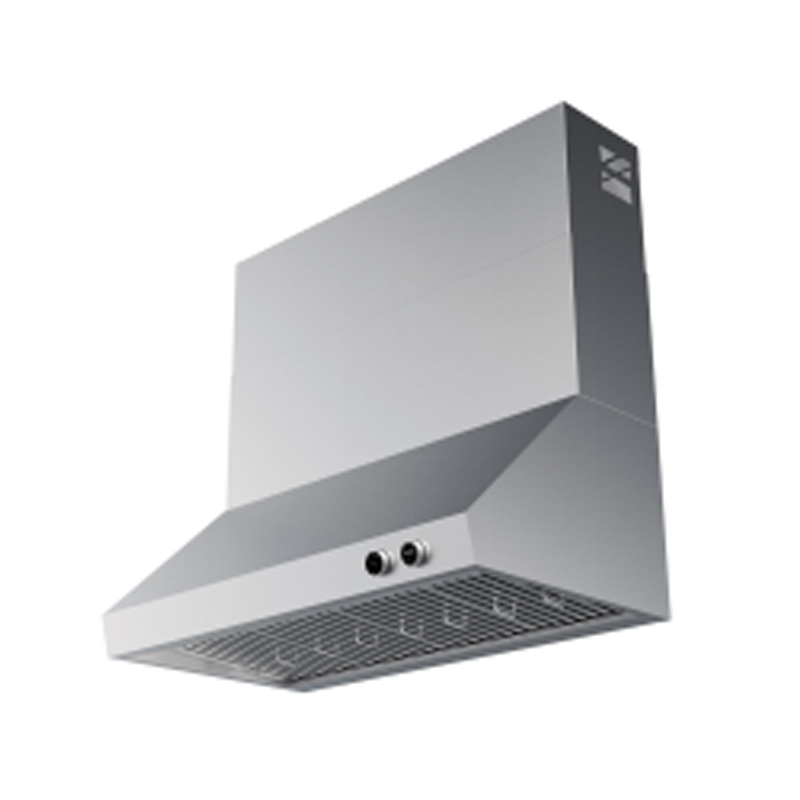 30-inch Stainless Steel Under Cabinet Range Hood for Gas StovesThis compact 30-inch hood matches four-burner residential gas ranges with a tower-style design. Its wide baffle filters and balanced airflow capture grease and odors while fitting standard cabinetry spacing in smaller kitchens.View Product →
Ducted vs Ductless: What Actually Works Over Gas
Ducted ventilation to the outside is the only complete solution for a gas stove. Ductless hoods capture grease and some odors, but they do not remove carbon monoxide, nitrogen dioxide, or the high humidity generated by gas combustion. Building codes in many regions treat outside venting as a requirement rather than an option.
| Factor | Ducted Hood | Ductless Hood |
|---|---|---|
| Removes combustion byproducts | Yes | No |
| Removes odor and smoke | Effectively | Partially, with charcoal filters |
| Installation complexity | Requires duct route | Simpler |
| Typical use case with gas | All residential and commercial kitchens | Only as a supplement |
If custom cabinetry or a low-profile ceiling hides the ductwork, an insert hood often fits better than a visible wall-mount unit. The 28-inch ducted range hood insert with 900 CFM airflow gives you the hidden appearance of a custom fabrication and a wide capture area that matches most compact commercial gas configurations. A ductless hood may save cost upfront, but it does not address the gases your gas stove is actually producing.
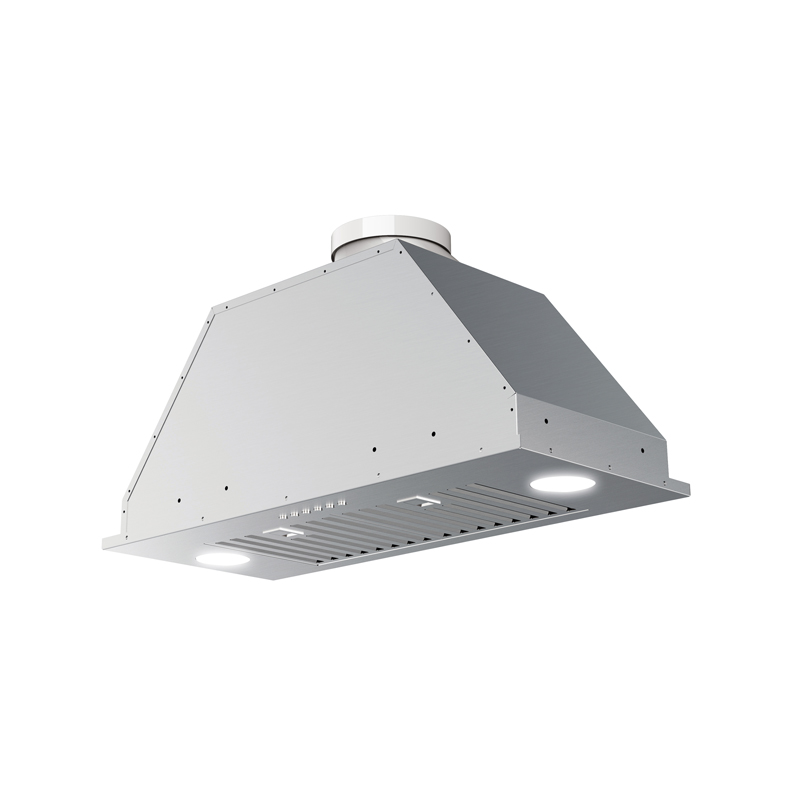 28-inch Ducted Insert Range Hood with 900 CFM AirflowDesigned for seamless built-in installation, this 28-inch insert hood delivers 900 CFM to effectively remove smoke and steam. Its stainless steel baffle filters are washable, making it a practical choice for custom cabinetry or low-profile ceilings.View Product →
Installation Height: 24-36 Inches and Why It Matters
Mount the hood 24 to 36 inches above the gas cooktop. This is not a random aesthetic choice. Too low, and the hood body can be damaged by heat and may obstruct your view or movement around the pan. Too high, and the capture zone loses efficiency, allowing steam and smoke to escape to the sides.
For a 30-inch gas range, a lower edge at 30 to 36 inches is a common starting point. For larger 48-inch or commercial-style ranges, the manufacturer's spec often allows more clearance, but the capture area becomes even more critical because the hood is physically farther from the rising plume. Always use the exact mounting distance recommended by your hood manufacturer as the first reference rather than a universal number.
- A hood installed too low disrupts your sight line and can expose the unit to excessive radiant heat
- A hood installed too high loses front-edge capture, especially near wide pans
- A chimney or telescoping duct liner can help adjust final height after installation
Stainless Steel, Filters, and Long-Term Life
Choose 304 stainless steel, not a less durable grade. Gas cooking produces a hot, humid environment that can pit or rust inferior steel over time. Look for baffle-style filters as well; baffle filters trap grease more reliably than fine mesh filters in high-humidity kitchens. A hood that is easy to open, with filters you can remove and wash, will stay effective far longer than one with a design that is difficult to clean.
When comparing stainless steel kitchen equipment, the practical differences are in thickness, finish, and the quality of the internal motor. A thin metal body flexes and amplifies noise; a soundly constructed hood feels solid and quiet.
Choosing the Right Hood Type for Your Gas Kitchen
Configuration matters just as much as performance. A standard wall-mount tower or trapezium hood works well when the gas range sits against a wall. An island hood hangs from the ceiling above a freestanding island range, giving 360-degree capture. An insert or built-in hood disappears into a custom cabinet shell or soffit, which is common in high-end commercial kitchens. For a grilling setup, a BBQ range hood with washable stainless filters handles the extra smoke and grease of outdoor-style cooking.
The 36-inch island range hood with 900 CFM airflow is a direct fit for a standard 36-inch gas island cooktop. The ceiling-mounted design draws the rising plume from all directions, which is exactly what an open kitchen needs when there are no cabinets to guide smoke toward a wall hood.
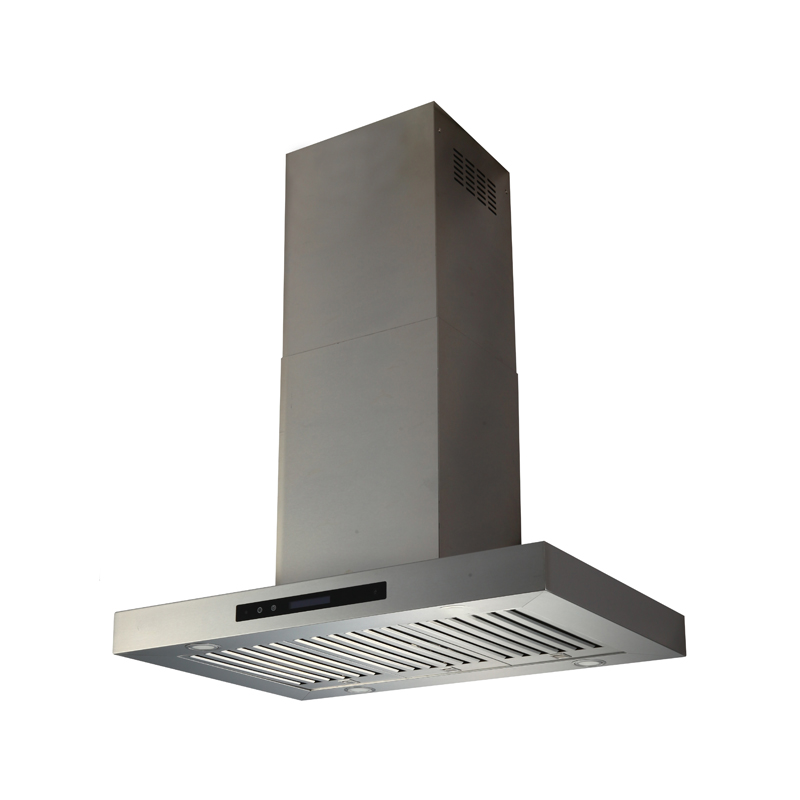 36-inch Island Range Hood with 900 CFM and Stainless FinishThis ceiling-mounted island hood covers standard 36-inch gas cooktops, drawing rising smoke from all directions. With a 900 CFM blower and washable baffle filters, it suits open kitchens where no cabinetry guides the plume.View Product →
If you are a manufacturer, project specifier, or commercial distributor planning a complete gas range line, the same engineering principles apply at larger scale. A professional stainless steel range hood can be matched to 30-inch, 36-inch, or 48-inch gas ranges, with custom width, CFM, finish, and filter configurations available through ODM partnerships.
FAQ
Q1: What size range hood do I need for a 36-inch gas stove?
Start with a 36-42 inch hood width and 900-1,200 CFM. If you use a wok burner or run long duct work, look at the top of that range or slightly beyond.
Q2: Can a ductless range hood work with a gas stove?
Not as the main ventilation method. A ductless hood does not remove combustion byproducts, and building codes often require outside venting for gas cooking appliances.
Q3: How high should a range hood be mounted above a gas cooktop?
Typically 24-36 inches. Check the manufacturer's instruction and local code for the exact permitted range for your gas range width and hood capacity.
Q4: What is the difference between baffle and mesh filters?
Baffle filters use angled strips that capture grease before it can pass through, making them a better choice for gas cooking. Mesh filters are lighter but catch less grease and require frequent cleaning.
Q5: What material should I look for in a gas stove range hood?
304 stainless steel. It resists corrosion from heat, steam, and the acids left behind by cooking grease better than 201 or 430 steel.
The recipe for a good gas stove hood is not a mystery: a real duct run, a CFM rating matched to your burner count, and a width that covers the cooking surface. Material, filter type, and mounting height all shape how comfortable the cooking experience feels over years of daily use. Whether you are outfitting a residential kitchen or planning a commercial stainless steel cooking line, start with those fundamentals and the rest of the specification follows naturally.
