

 English
 Español
 عربى
عربى







Content
- 1 Why Stainless Steel Range Hoods Outperform Other Materials
- 2 Key Specifications to Check Before Buying
- 3 Stainless Steel Range Hood Styles and Their Best Use Cases
- 4 Comparing Common Stainless Steel Range Hood Configurations
- 5 Matching the Hood to Your Cooking Equipment
- 6 Buying Stainless Steel Range Hoods from a Direct Manufacturer
- 7 Frequently Asked Questions About Stainless Steel Range Hoods
- 7.0.1 Q1: What is the best grade of stainless steel for a range hood?
- 7.0.2 Q2: How many CFM do I need for a stainless steel range hood?
- 7.0.3 Q3: Can I install a stainless steel range hood over an island?
- 7.0.4 Q4: Are stainless steel range hoods easy to clean?
- 7.0.5 Q5: Should I choose a ducted or ductless range hood?
Your range hood works silently behind the scenes, but it has a direct impact on kitchen comfort, safety, and cleanliness. A stainless steel range hood that is properly sized and correctly installed will keep smoke, grease, and cooking odors under control in both commercial and residential kitchens. The key is not to buy the first stainless steel hood you see, but to evaluate airflow, width, and mounting style before you make a purchase decision.
Whether you are outfitting a restaurant, a hotel kitchen, or a home cooking space with professional-grade equipment, the right hood ensures that the air stays clean and that your kitchen remains safe and easy to maintain.
Why Stainless Steel Range Hoods Outperform Other Materials
Stainless steel has been the default material in professional kitchens for decades, and the reasons are practical. It resists high heat, steam, cooking oil, and acidic residues that would degrade powder-coated steel or plastic over time. Stainless steel does not crack or chip, it wipes clean quickly, it does not hold onto odors, and it can be sanitized without damage.
One of the first specifications to evaluate is the steel grade. Grade 304 stainless steel contains about 18 percent chromium and 8 percent nickel, which gives it superior corrosion resistance. It is the recommended choice for commercial hoods and for kitchens located in humid or coastal environments. Grade 430 stainless steel contains less nickel, making it a more economical alternative that still performs well in typical indoor residential settings.
Material thickness is equally important. Hoods made from 18-gauge or 19-gauge stainless steel provide a sturdier body for large wall-mounted units and built-in inserts, while 21-gauge steel is common in lighter residential models. Thicker steel resists dents and warping, which matters most for hoods that span 48 inches or more.
Key Specifications to Check Before Buying
Four specifications determine whether a stainless steel range hood will perform well in your kitchen: airflow, width, noise level, and filtration.
Airflow, measured in cubic feet per minute (CFM), is the most important performance indicator. To size a hood correctly, look at the total BTU output of your cooktop. A practical rule is 100 CFM for every 10,000 BTU, with a minimum of 600 CFM for a standard residential gas range. Commercial equipment with high-BTU burners often requires 900 CFM or more. You can read a more detailed breakdown in our article on how much CFM your range hood really needs.
Practical sizing rule: 100 CFM per 10,000 BTU, with a minimum of 600 CFM for residential gas ranges and 900 CFM or more for commercial equipment.
Width matters just as much. The hood should be at least as wide as the cooking surface, and ideally slightly wider, so it captures rising smoke before it spreads. A 36-inch stainless steel range hood is the usual match for a 30-inch range, while a 48-inch hood is paired with a 48-inch professional range.
Noise is measured in sones. A hood running at 4 to 6 sones is audible but manageable, while anything under 4 sones is considered quiet. High-CFM hoods may generate more sound, so check the sone rating at the speed you plan to use most often.
Filtration comes down to ducted versus ductless configuration. Ducted systems vent smoke and grease outdoors and are strongly recommended for professional-grade cooking. Ductless systems recirculate air through charcoal filters, but they are significantly less effective for heavy cooking.
Stainless Steel Range Hood Styles and Their Best Use Cases
Stainless steel range hoods are available in several mounting styles, and the right choice depends on your kitchen layout and the position of your cooking equipment.
Wall-Mounted Range Hoods
Wall-mounted hoods attach to the wall directly above a range or rangetop and are the most common type in both residential and commercial kitchens. Tower, trapezium, T-shape, and F-shape designs offer different visual profiles while delivering the same core function. A tower shape covers the ductwork completely, which creates a clean, integrated look. For a wall-mounted gas range, a 36-inch stainless steel wall mount tower range hood combines sufficient coverage with a professional appearance.
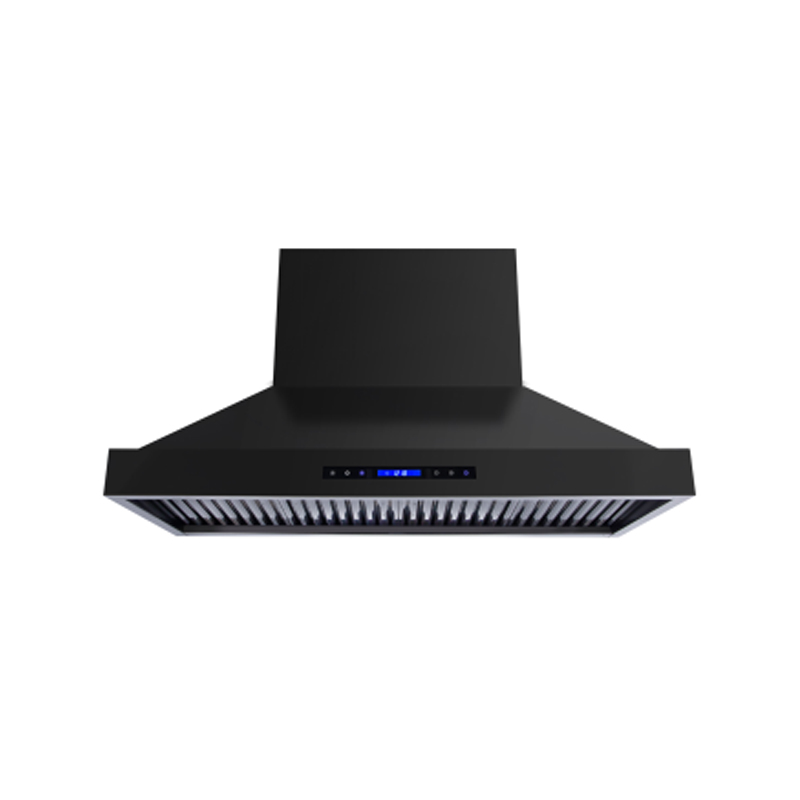 Reidom 36-Inch Stainless Steel Wall Mount Tower Range Hood with Touch ControlsThis wall-mounted tower hood covers ductwork for a clean look and uses body sense and touch buttons for easy operation, making it a strong match for the wall-mounted gas range mentioned in the surrounding text.View Product →
Island Range Hoods
Island hoods hang from the ceiling above a kitchen island and must look good from every angle because they are not backed by a wall. If you cook on an island, a 36-inch stainless steel island range hood with 900 CFM provides the airflow needed for high-heat cooking while serving as a professional centerpiece for the space.
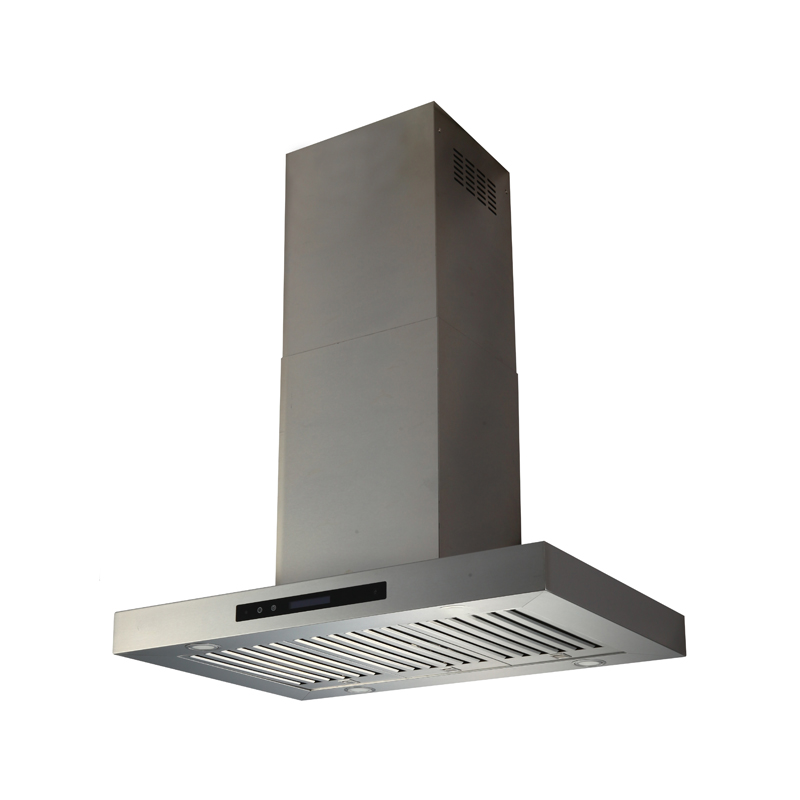 Reidom 36-Inch Stainless Steel Island Range Hood with 900 CFMDesigned for island cooking, this 36-inch hood offers 900 CFM airflow and washable baffle filters, fitting the description of an island centerpiece required for high-heat cooking in the preceding paragraph.View Product →
Insert Range Hoods
Insert hoods are built into custom cabinetry, false ceilings, or decorative surrounds. They allow you to hide the hood body and maintain a seamless finish, which is popular in design-driven kitchens and in commercial settings where equipment should remain visually unobtrusive. A 28-inch stainless steel range hood insert with 900 CFM fits inside a custom wood hood or soffit and provides professional-grade extraction without interrupting the kitchen design.
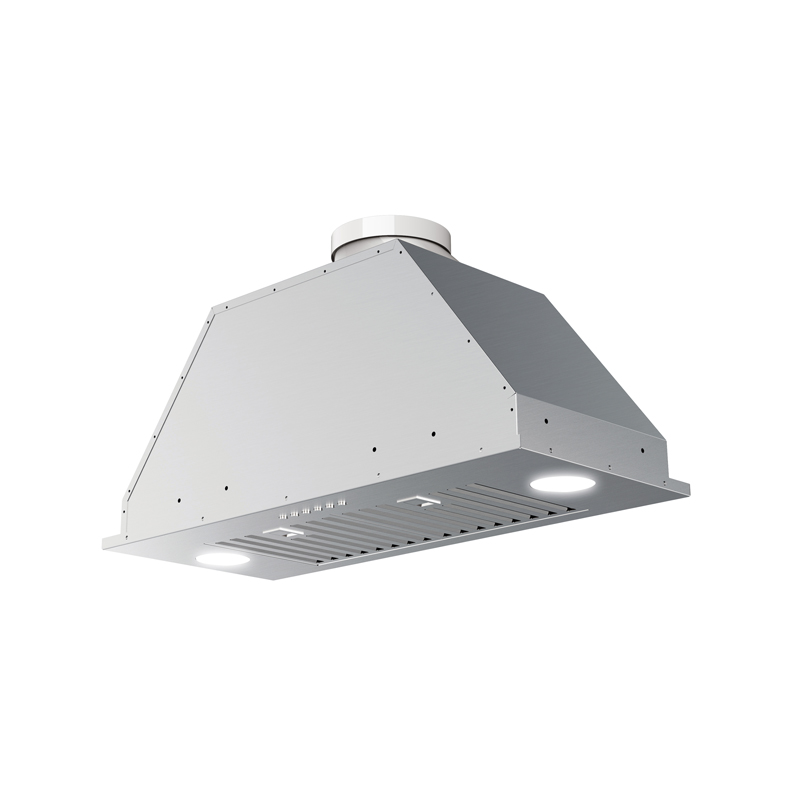 Reidom 28-Inch Stainless Steel Insert Range Hood with 900 CFMThis 28-inch insert hood integrates into custom cabinetry or soffits, providing 900 CFM extraction and washable stainless steel filters, aligning with the need for a hidden, seamless ventilation solution discussed above.View Product →
Under Cabinet and BBQ Range Hoods
Under cabinet hoods fit beneath standard upper cabinets and are a practical choice for compact kitchens. BBQ range hoods are built for high-heat grilling environments and come in 48-inch and 60-inch widths with washable stainless steel filters, making them suitable for both outdoor cooking stations and commercial grill kitchens.
Comparing Common Stainless Steel Range Hood Configurations
The table below provides a quick reference for common stainless steel range hood configurations and the situations where each type works best.
| Hood Type | Typical Width | Airflow | Best For |
|---|---|---|---|
| Insert | 28 in | 900 CFM | Custom cabinetry, seamless design |
| Wall Mount Tower | 30 to 48 in | 600 to 900+ CFM | Wall-mounted professional ranges |
| Island | 36 in | 900 CFM | Island cooktops, open kitchens |
| BBQ | 48 to 60 in | 1200+ CFM | Grills, outdoor cooking stations |
| Under Cabinet | 30 to 36 in | 600 to 900 CFM | Residential kitchens with limited space |
Matching the Hood to Your Cooking Equipment
The most overlooked part of range hood selection is how the hood works with the appliance beneath it. A hood must cover the entire cooking surface, and its airflow must be sized to the heat output of the burners.
A 30-inch professional range with a 4.6 cubic foot oven can be paired with a 28-inch insert hood or with a 30-inch wall-mounted unit if you prefer a visible design. A 36-inch range with a 5.5 cubic foot oven typically demands a 36-inch hood, while a large 48-inch range with a 7 cubic foot oven should be matched with a 48-inch hood to prevent smoke from escaping around the edges.
Rangetops without built-in ovens are often installed over an island or in a custom countertop. They generate the same heat and grease load as a full range, so the same sizing and CFM rules apply. For gas appliances, mount the hood between 24 and 30 inches above the cooking surface. For electric cooktops, the distance can usually be reduced to 18 to 24 inches, depending on the manufacturer's specification.
Buying Stainless Steel Range Hoods from a Direct Manufacturer
Buying directly from a manufacturer is one of the most effective ways to control cost and quality when purchasing stainless steel range hoods. Direct supply eliminates distributor markup, shortens lead times, and gives you the option to request custom sizes, finishes, and features.
Buyers such as restaurant suppliers, kitchen contractors, and appliance brands can benefit from working with a manufacturer that offers OEM and ODM services. A supplier with its own factories, automated production lines, and robotic welding can develop hoods from drawings or samples, produce the required dimensions, and maintain consistent quality across large batches. In-house laboratories support quality control before shipment, which is especially important when a hood needs to pass specific acceptance criteria on arrival.
When evaluating a long-term supplier, consider material grades, production capacity, export experience, and packaging standards. Requesting samples, reviewing test reports, and verifying the supplier's ability to deliver on time are practical steps before committing to a full order.
Frequently Asked Questions About Stainless Steel Range Hoods
Q1: What is the best grade of stainless steel for a range hood?
Grade 304 stainless steel is generally recommended for range hoods, especially in commercial kitchens or humid environments. Grade 430 is a more economical option that performs well for moderate residential use.
Q2: How many CFM do I need for a stainless steel range hood?
Use the rule of 100 CFM per 10,000 BTU of your cooktop output. A 30-inch gas range typically needs around 600 CFM, while commercial high-BTU setups commonly require 900 CFM or more.
Q3: Can I install a stainless steel range hood over an island?
Yes. Island range hoods are designed to hang from the ceiling and provide visual appeal from every angle. A 36-inch island hood with 900 CFM is suitable for large island cooktops.
Q4: Are stainless steel range hoods easy to clean?
Yes. Stainless steel resists grease buildup and can be wiped down with mild soap and water. Baffle filters should be removed and cleaned periodically, and many of them are dishwasher safe.
Q5: Should I choose a ducted or ductless range hood?
Ducted hoods are recommended because they remove smoke and grease effectively. Ductless hoods recirculate air through charcoal filters, but they are less effective for heavy cooking.
Choosing a stainless steel range hood comes down to matching your cooking equipment, the layout of your kitchen, and your expectations for performance. Pay attention to CFM, width, material grade, and mounting style. When you buy directly from a manufacturer, you gain access to custom options and more competitive pricing. The right stainless steel hood will protect your kitchen from heat and grease, keep the air clean, and serve you well for years.
