

 English
 Español
 عربى
عربى







Content
- 1 Why CFM Is the Number That Actually Matters
- 2 How Kitchen Hood CFM Is Actually Determined
- 3 Kitchen Hood CFM Guidelines by Cooktop Type
- 4 Island Hoods Need More Airflow Than Wall-Mounted Units
- 5 Sizing a Range Hood Insert Correctly
- 6 Visualizing How Duct Configuration Affects Delivered CFM
- 7 Balancing High CFM Range Hood Performance With Noise
- 8 Gas Stove CFM Requirement and Makeup Air
- 9 How Filter Type Affects Real-World Airflow
- 10 Ducted Versus Recirculating: Why It Changes the CFM Conversation
- 11 Sizing Mistakes That Undermine Kitchen Ventilation
- 12 Quick Reference: How to Choose Range Hood CFM
- 13 Frequently Asked Questions
- 13.0.1 Q1: What CFM range hood do I need for a standard gas range?
- 13.0.2 Q2: Is higher CFM always better?
- 13.0.3 Q3: Do electric and induction cooktops need less CFM than gas?
- 13.0.4 Q4: How much extra CFM does an island hood need compared to a wall mounted hood?
- 13.0.5 Q5: Does duct length actually make a measurable difference?
- 13.0.6 Q6: What sone rating should I look for?
- 13.0.7 Q7: Can I use a range hood cfm calculator instead of the general guidelines here?
- 13.0.8 Q8: Does a wider kitchen room need a higher CFM range hood?
Why CFM Is the Number That Actually Matters
Walk into any kitchen showroom and the sales talk usually centers on stainless finish, control style, or lighting. None of that determines whether a hood actually does its job. The single spec that decides whether smoke, grease, steam, and odor leave your kitchen instead of settling on your cabinets is airflow, measured in cubic feet per minute. Understanding range hoods from an engineering standpoint starts with this one number.
CFM tells you how much air a blower moves in sixty seconds. A hood rated at 400 CFM exchanges roughly 400 cubic feet of kitchen air every minute it runs. Too low, and grease-laden air lingers over your cooktop. Too high, and you risk depressurizing the room, pulling combustion gases backward through furnace or water heater flues, and generating blower noise loud enough that nobody bothers turning the hood on at all.
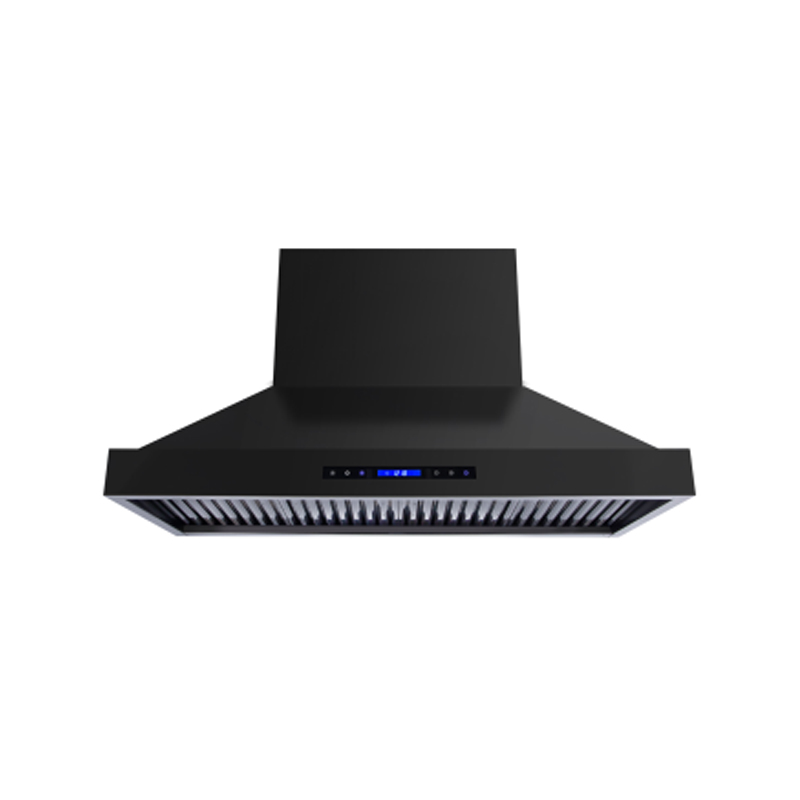
How Kitchen Hood CFM Is Actually Determined
Manufacturers size blowers around three variables: the heat output of the cooking appliance beneath the hood, the width of the cooking surface, and the distance and configuration of the ductwork carrying air outside. None of these variables work in isolation, and skipping any one of them is the most common reason a newly installed hood underperforms. A hood chosen purely by matching a number on a spec sheet to a number in a buying guide, without accounting for the actual duct path in a specific home, frequently disappoints even when every individual component was rated correctly.
Heat Output of the Cooktop
Gas burners release combustion byproducts along with heat, so gas cooking surfaces need noticeably more airflow than electric or induction cooktops of the same width. Electric and induction ranges produce no combustion gases, so ventilation needs are based almost entirely on steam, grease particulates, and odor, letting a lower rated hood perform adequately.
Width of the Cooking Surface
A wider cooktop spreads heat, steam, and airborne grease across a larger area, and the capture zone of the hood has to match that footprint. A hood narrower than the cooktop beneath it will always struggle, regardless of how strong its blower is rated, because the plume escapes past the uncovered edges before it reaches the filters.
Duct Length, Diameter, and Bends
A blower rated at 600 CFM in a lab test almost never delivers 600 CFM once installed. Every 90 degree elbow, every foot of undersized ducting, and every roof or wall cap restricts airflow. Long horizontal duct runs and narrow six inch ducting on a high powered blower are a frequent mismatch that leaves homeowners with a loud hood that still underperforms.
Kitchen Hood CFM Guidelines by Cooktop Type
The table below reflects widely used ventilation industry guidelines for how much CFM for range hood installations is generally recommended, based on cooktop fuel type and total burner output. These are starting points for planning, not a substitute for a full kitchen airflow assessment.
| Cooktop Type | Typical Output | Suggested CFM Range | Notes |
|---|---|---|---|
| Electric or Induction, 30 to 36 in | Not BTU rated | 300 to 450 | Lower grease and steam load |
| Gas, Standard Residential | Up to 45,000 BTU total | 400 to 600 | Suitable for most home kitchens |
| Gas, High Output Burners | 45,000 to 65,000 BTU total | 600 to 900 | Common with pro-style ranges |
| Gas, Commercial-Style | Above 65,000 BTU total | 900 to 1200 plus | May require makeup air system |
A frequently cited rule of thumb in the ventilation trade is to size a hood around one hundred CFM for each foot of cooktop width for typical gas ranges, then adjust upward for high output burners or a wide island installation. Treat this as a floor, not a ceiling.
Island Hoods Need More Airflow Than Wall-Mounted Units
An island cooktop is exposed on all four sides, with no wall or back splash to help contain rising heat and steam. Kitchen airflow studies consistently show that cross drafts from foot traffic, HVAC vents, and open windows disrupt the capture pattern of an island hood far more than a wall mounted unit tucked into a corner. For that reason, ventilation guidelines typically add ten to twenty percent more CFM to island installations compared to an equivalent wall mounted hood over the same cooktop.
A properly sized 36-inch island range hood paired with a wide gas cooktop needs enough overhang and blower capacity to capture the plume before ambient air currents pull it sideways. Mounting height matters just as much as CFM rating here: an island hood mounted too high above the cooktop loses much of its rated capture efficiency regardless of blower strength.
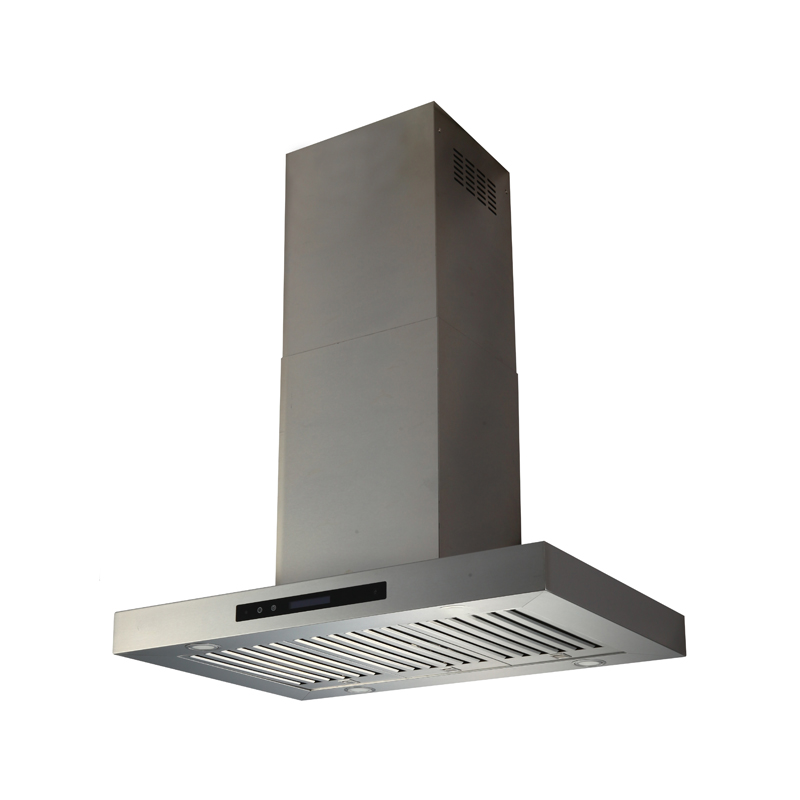
Island Hood Sizing Checklist
- Hood width should extend at least three inches beyond each side of the cooktop
- Mounting height generally falls between 30 and 36 inches above the cooking surface for high output gas ranges
- Add extra CFM capacity to offset open-room air currents
- Confirm ceiling duct routing before finalizing blower selection
Sizing a Range Hood Insert Correctly
Inserts are built to disappear into custom cabinetry or a decorative wood chimney, which makes them popular for kitchens where the homeowner wants ventilation performance without a visible metal box. Because the blower housing is hidden, insert sizing is easy to get wrong. A 28-inch range hood insert should be matched to the finished opening width of the surrounding cabinetry as well as the cooktop width beneath it, and the duct transition from insert to chimney chase needs to avoid tight bends that choke airflow.
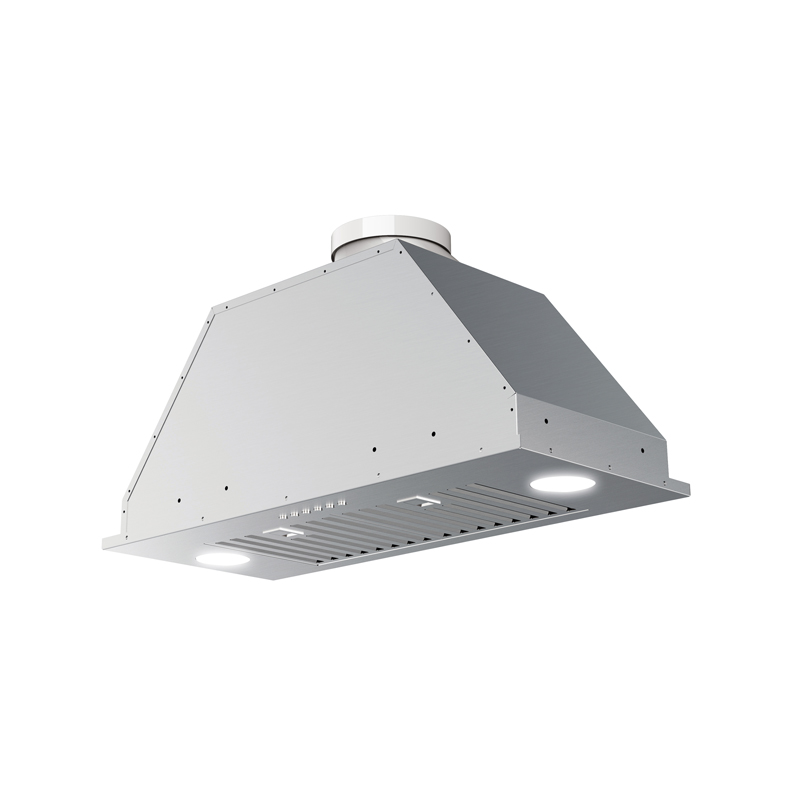
Common Insert Installation Mistakes
- Building the surrounding chase too narrow, forcing sharp duct bends immediately behind the blower
- Choosing an insert width that matches the cooktop exactly rather than allowing for overhang
- Ignoring rated static pressure loss when the duct run exceeds the manufacturer recommended length
- Skipping a damper check, which can allow backdraft when the hood is off
Visualizing How Duct Configuration Affects Delivered CFM
The diagram below illustrates why a blower's rated CFM on the box rarely matches what actually exits the roof or wall cap. Each elbow and every extra foot of duct adds resistance that the blower has to work against.
As a general planning guideline, each 90 degree elbow can reduce effective airflow noticeably, and undersized duct diameter compounds the loss further. This is why a range hood cfm calculator built into a manufacturer website usually asks for duct length and elbow count, not just cooktop width. A kitchen with a straight, short vertical run through the roof will lose far less airflow than one where the duct has to snake horizontally through joists before turning upward, even if both installations use the identical blower.
Contractors sizing new construction or a remodel typically plan the duct path before selecting the blower, rather than the other way around. Choosing the hood first and then forcing the ductwork to fit around existing framing is a common source of the gap between rated and delivered CFM described above.
Balancing High CFM Range Hood Performance With Noise
Airflow and sound output rise together. Blower noise is measured in sones, and many households discover that a hood rated for very high CFM is so loud on its top setting that nobody actually uses it there, which defeats the purpose of buying extra capacity in the first place.
| Sone Rating | Perceived Loudness | Typical Use Setting |
|---|---|---|
| Under 3 sones | Quiet, comparable to a modern refrigerator | Low and medium speeds |
| 3 to 6 sones | Noticeable but tolerable during active cooking | Medium to high speeds |
| Above 6 sones | Loud enough to interrupt conversation | Boost or maximum speed only |
A well engineered pro-style range hood airflow system uses a multi speed blower with a quiet everyday setting and a boost mode reserved for searing or wok cooking, rather than a single fixed high output fan. When comparing two hoods with similar CFM ratings, sone rating at comparable speeds is often the more meaningful difference for daily comfort.
Gas Stove CFM Requirement and Makeup Air
Once a kitchen exhaust system exceeds a certain airflow threshold, building codes in many jurisdictions require a makeup air system to replace the exhausted air with fresh outside air. This exists because a powerful exhaust fan can depressurize a tightly sealed home enough to pull combustion gases backward down a water heater or furnace flue, a hazard known as backdrafting.
Before selecting a hood rated above 400 CFM, check local building code requirements. Many jurisdictions set the makeup air threshold in that range, and skipping this step can create a failed inspection or, more seriously, an unsafe combustion appliance environment.
- Confirm whether your local code ties makeup air requirements to a specific CFM threshold
- Have any gas fired water heater or furnace tested for backdrafting after a new high CFM hood is installed
- Consider a passive or motorized makeup air damper if code requires one
- Do not oversize a hood simply because a higher number sounds safer, since excess CFM without makeup air introduces its own risks, and a licensed local HVAC contractor can confirm the correct threshold for your jurisdiction
How Filter Type Affects Real-World Airflow
Filters sit directly in the path of the air a blower is trying to move, so filter design has a direct impact on how much of the rated CFM actually reaches the duct. Two filter types dominate residential hoods, and each behaves differently as grease accumulates over time.
| Filter Type | Airflow Restriction | Maintenance Behavior |
|---|---|---|
| Baffle Filters | Low, stays consistent as grease builds up | Dishwasher safe, wash every few weeks |
| Mesh Filters | Moderate, increases noticeably as grease accumulates | Needs more frequent washing to maintain airflow |
A hood that measured well within specification on installation day can drift well below its rated CFM within a few months if filters are neglected. Baffle style filters are generally preferred on high output pro-style range hood airflow systems because their open channel design resists clogging better than fine mesh screens, keeping delivered airflow closer to the rated number over time.
Ducted Versus Recirculating: Why It Changes the CFM Conversation
A rated CFM number only means what it claims to mean when the hood is ducted to the outside. Recirculating, or ductless, hoods pull air through a charcoal filter and return it to the room rather than exhausting it outdoors. Because no combustion gases or moisture actually leave the kitchen, a recirculating unit rated at a given CFM does not provide the same real-world ventilation as a ducted hood rated at the same number.
- Ducted hoods remove heat, moisture, and combustion byproducts entirely from the home
- Recirculating hoods filter grease and some odor but return heat and moisture to the kitchen
- Charcoal filters in recirculating systems lose effectiveness over time and require regular replacement
- For gas cooktops, a ducted configuration is strongly preferred whenever the kitchen layout allows it
When comparing two hoods on paper, always confirm whether the published CFM figure reflects ducted operation. A recirculating unit with an impressive blower rating still cannot match the actual air exchange of a modest ducted installation.
Sizing Mistakes That Undermine Kitchen Ventilation
Most underperforming range hood installations trace back to a handful of repeated errors rather than a defective product. In many service calls, the blower itself tests fine on the bench, and the shortfall traces back to how the unit was installed or how the surrounding kitchen was configured. Reviewing these patterns before a purchase decision is far cheaper than diagnosing them after cabinetry and ductwork are already in place.
- Matching hood width to cooktop width exactly, leaving no overhang to capture drifting steam and grease at the edges
- Ignoring duct length during blower selection, resulting in a powerful rated blower that delivers a fraction of its capacity
- Mounting height set too high above the cooking surface in an attempt to reduce visual bulk, which sacrifices capture efficiency
- Choosing CFM based on kitchen size alone instead of cooktop output, which overlooks the real source of heat and grease-laden air
- Skipping a make-up air evaluation when selecting a hood above the local code threshold
Quick Reference: How to Choose Range Hood CFM
Identify your cooktop fuel type and total burner output
Measure cooktop width and add overhang for the hood
Map planned duct length, diameter, and elbow count
Add extra capacity for an island or open-plan layout
Check local code for makeup air thresholds
Compare sone ratings at the speed you will actually use daily
Working through these six steps in order, rather than starting with a CFM number pulled from an online forum, produces a hood selection that matches your actual cooktop, ductwork, and kitchen layout instead of a generic average that may not apply to your home.
Frequently Asked Questions
Q1: What CFM range hood do I need for a standard gas range?
Most standard residential gas ranges with total burner output under 45,000 BTU are well served by a hood in the 400 to 600 CFM range, adjusted for cooktop width and duct configuration.
Q2: Is higher CFM always better?
No. Oversized blowers add noise, energy use, and in many cases trigger a makeup air requirement. The goal is matching CFM to actual cooking load and duct configuration, not maximizing the number.
Q3: Do electric and induction cooktops need less CFM than gas?
Generally yes, since there are no combustion byproducts to remove. Ventilation needs for electric and induction cooktops focus mainly on steam, grease, and cooking odor.
Q4: How much extra CFM does an island hood need compared to a wall mounted hood?
A common industry guideline adds roughly ten to twenty percent more CFM for an island installation to compensate for exposure on all sides and cross drafts from room air currents.
Q5: Does duct length actually make a measurable difference?
Yes. Long horizontal runs, undersized duct diameter, and multiple elbows all reduce the air a blower can deliver, sometimes substantially below its rated capacity.
Q6: What sone rating should I look for?
For everyday cooking, a rating under three sones on low and medium speeds keeps the hood quiet enough that most households will actually use it consistently, reserving higher speeds for occasional high heat cooking.
Q7: Can I use a range hood cfm calculator instead of the general guidelines here?
A calculator can be a helpful starting point, but the most reliable ones ask for cooktop BTU output, hood width, duct length, and elbow count together. Treat any calculator result as a starting range to confirm against local code and the specific duct configuration in your kitchen.
Q8: Does a wider kitchen room need a higher CFM range hood?
Room size has a smaller impact than most homeowners assume. What matters most is the heat and grease load coming directly off the cooktop, plus how far that plume has to travel to reach the hood. A large room with a modest gas cooktop does not automatically need a high CFM range hood.
