

 English
 Español
 عربى
عربى







Content
- 1 Why Propane Remains a Practical Cooking Fuel for Commercial Kitchens
- 2 Key Specifications to Evaluate in a Propane Stove Top
- 3 Sizing and Layout Considerations
- 4 Installation and Utility Requirements
- 5 Stove Top vs Range: Which Format Fits Your Kitchen?
- 6 Daily Maintenance and Equipment Longevity
- 7 Frequently Asked Questions
When a kitchen renovation project begins and the building has no natural gas line, propane is often the most compelling option. The short answer is that propane is a reliable cooking fuel when matched to the right equipment. A propane stove top delivers faster heat than electric, requires no high-voltage wiring, and can be installed where municipal gas is not available. The details matter, though: burner output, sizing, and installation requirements determine whether the equipment delivers the performance you expect.
Why Propane Remains a Practical Cooking Fuel for Commercial Kitchens
Propane has a higher heat density than natural gas, which means a properly tuned burner can push more BTUs into the pan per unit of fuel. In a commercial kitchen this translates into faster boil times, a stronger searing curve, and better wok handling when the gas supply is correctly regulated.
Another advantage is infrastructure independence. A propane stove top can run on LP tanks or bulk storage tanks, which makes it suitable for food trucks, rural restaurants, and prefabricated kitchen units. There is no need to wait for a municipal gas connection, and the storage system can be scaled to match the kitchen's demand.
The trade-off is fuel price. Propane often costs more per therm than natural gas, but this is usually offset by lower installation costs for gas piping and the elimination of high-voltage electrical upgrades. For kitchens that cannot access a gas main, propane remains the more practical answer.
Practical note: Before choosing propane, verify the local safety codes and insurance requirements for LP gas storage in your area. Some jurisdictions have specific rules about tank placement and maximum storage volume.
Key Specifications to Evaluate in a Propane Stove Top
When comparing models, three factors matter most when the goal is commercial reliability: burner BTU output, burner count, and ignition safety.
BTU output per burner: 15,000-20,000 BTU for standard high-efficiency burners, up to 45,000 BTU for wok burners. A 30,000 BTU burner will sear a 14-inch skillet in under 3 minutes, which is a practical benchmark.
- Burner configuration: choose 4-6 burners for a 36-inch unit, and 6-8 burners for a 48-inch unit. Each burner should be independently adjustable.
- Ignition type: electronic spark ignition is preferred in commercial settings because it is safer and more responsive than continuous pilot lights.
- Flame failure device (FFD): mandatory in most commercial jurisdictions. The device shuts off the gas automatically if the flame is extinguished, which is essential for safety in an unattended kitchen.
- Grate and burner design: heavy cast iron grates handle stock pots and woks without warping. Look for a surface that allows a stable pan position.
Stainless Steel vs Cast Iron Construction
Stainless steel is the standard for commercial stove tops because it resists corrosion and is easy to clean. Cast iron burner caps add durability but need seasoning to prevent rust. The combination of a stainless steel body with cast iron grates is the most common commercial configuration.
Sizing and Layout Considerations
Kitchen layout determines whether a 36-inch or 48-inch propane stove top is the right choice. The rule of thumb is to count the number of positions for pans that a typical cooking service requires.
| Size | Burner Positions | Best Fit |
|---|---|---|
| 36-inch | 4-6 | Small restaurants, breakfast counters, prep kitchens |
| 48-inch | 6-8 | High-volume restaurants, commercial dining, catering |
A 36-inch propane stove top is a common starting point for small-to-medium kitchens because it provides enough cooking surface without consuming too much floor space. For kitchens considering a compact propane rangetop that fits standard counters, the Reidom 36-inch rangetop offers a four-burner setup that aligns with the 36-inch sizing.
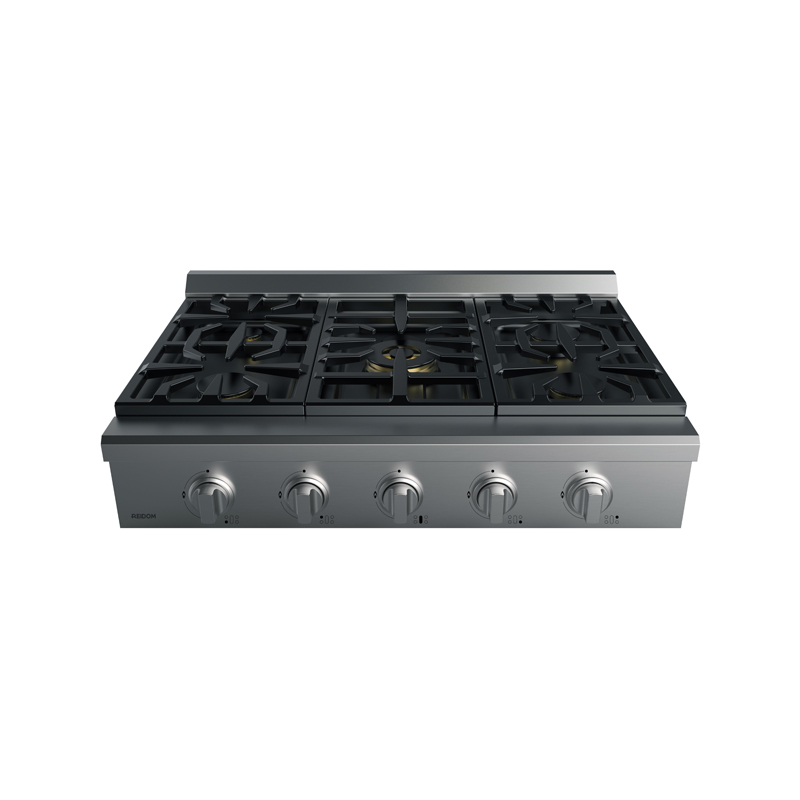 Reidom 36-Inch Dual Burner Rangetop with Cast Iron Grates and SimmerThis 36-inch rangetop fits standard counter spaces, offering four burners with heavy-duty cast iron grates and a simmer function for small to medium kitchens needing a compact yet capable cooking surface.View Product →
A 48-inch model offers a wider cooking area and more burner separation for kitchens that run multiple sauces, stews, or wok dishes simultaneously. For high-volume kitchens that need more burner spacing and a broader cooking surface, the Reidom 48-inch rangetop can accommodate six to eight pans with additional room for large stock pots.
 Reidom 48-Inch Rangetop with 7 Burners and Reversible GriddleWith seven burners and a reversible cast-iron griddle, this 48-inch rangetop delivers extra burner spacing and surface area, ideal for high-volume cooking with multiple pans or large pots.View Product →
If you already have a wall oven or plan to install one, a rangetop saves floor space and gives you more flexibility. If you need the oven in the same footprint as the burners, a range should be your next consideration.
Installation and Utility Requirements
A propane stove top requires more than just a gas line. The following installation points should be reviewed before ordering the equipment.
- Gas pressure and regulator: propane systems need a two-stage regulator to maintain consistent pressure. Check the manufacturer's required operating pressure, usually 10-11 inches of water column.
- Ventilation: the range hood CFM should be high enough to clear the grease and heat produced by the burners. A rough rule is 1 CFM per 100 BTU of total stove top output.
- Clearance from combustible materials: most commercial propane stove tops require 4 inches of side clearance and 4 inches of rear clearance. Confirm with the installation manual.
- Floor protection: if the stove top is installed on a combustible floor, protect the floor with a non-combustible mat or sheet metal reinforcement.
Key requirement Check local codes for LP gas storage before designing the supply system.
Propane conversion is not a one-size-fits-all operation. Some models ship as natural gas units with an LP conversion kit included. The conversion should be performed by a certified gas technician to avoid pressure imbalances and safety hazards.
Ventilation is especially important for propane because the fuel produces carbon monoxide. The exhaust system must be ducted outdoors and should match the total heat load. A properly sized hood also improves working conditions in the kitchen by reducing surface temperatures and smoke.
Stove Top vs Range: Which Format Fits Your Kitchen?
A propane stove top and a propane range are not interchangeable in every kitchen, and the difference is not always obvious. A rangetop is a surface-only cooking unit that occupies space on a worktop or counter and requires a separate wall oven. A range is a single appliance containing both burners and an oven in one footprint.
The choice usually depends on space and workflow. If the kitchen already has a wall oven or a bank of ovens near the cooking line, a propane rangetop is the most space-efficient option. If the cooking line is new and needs oven space, a range might be the better solution because it combines the two functions.
When comparing the two formats, the important performance factors remain the same: burner BTUs, ignition quality, and the ability to convert the unit to propane either at the factory or in the field. For a closer look at the functional distinctions, this explanation of gas rangetop vs gas range differences covers the practical implications in more detail.
If a full range with an oven fits your cooking line better, the Reidom 36-inch all-gas range offers a 5.5 cubic foot oven and a burner configuration that can be set up for propane service. This option is useful when you want a single appliance to handle both cooking and baking without occupying additional floor space.
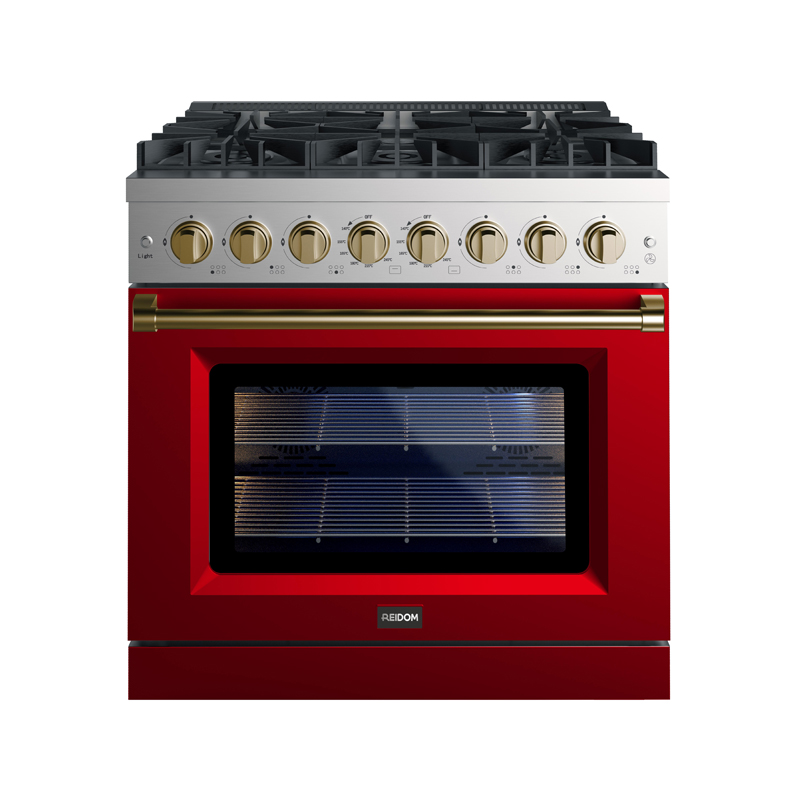 Reidom 36-Inch All Gas Range with 5 Burners and Convection OvenThis all-gas range combines a five-burner cooktop and a 5.5-cubic-foot convection oven in a single unit, saving floor space while providing baking and cooking flexibility.View Product →
Daily Maintenance and Equipment Longevity
A propane stove top is a durable piece of equipment, but it does need consistent maintenance to perform at its best.
Daily
Wipe down the stainless steel body after service, and burn off food residue on the grates. Allow the grates to cool before brushing them with a stiff wire brush.
Weekly
Check the gas connection with a soap-and-water solution. Bubbles indicate a leak. Also inspect the burner ports for debris and clean them with a small wire brush or compressed air.
Monthly
Look at the ignition electrodes to make sure the spark gap is clean and close to the burner. A weak spark is usually the result of carbon buildup or a cracked ceramic tip.
Longevity depends on the quality of the cast iron grates and the resistance of the stainless steel to pitting. Cheaper units often fail at the burner caps, which can crack after repeated thermal cycles. Investing in heavier cast iron grates at the start saves replacement costs later.
Frequently Asked Questions
Q1: Can a natural gas stove top be converted to propane?
Yes, in most cases. Most commercial gas stove tops ship with an LP conversion kit. The process involves replacing the burner orifices, adjusting the air shutter, and sometimes changing the main gas valve. This should be done by a certified gas technician.
Q2: How many BTUs do I need for a high-volume commercial kitchen?
For a 36-inch stove top, look for a total output of at least 100,000 BTU. For a 48-inch unit, 140,000 BTU or more is appropriate. The burner match matters more than the headline number, so check individual burner ratings.
Q3: Is propane safe for indoor use?
Yes, when installed correctly. Propane burns cleanly and produces less carbon monoxide than some older installations, but it still requires proper ventilation. An indoor propane stove top must be connected to an exhaust system and installed according to local codes.
Q4: Do I need a special type of range hood for a propane stove top?
No, a standard commercial range hood that matches the total BTU output and installation type is sufficient. The key requirement is that the hood is ducted to the outdoors and that the CFM rating matches the heat load.
Selecting a propane stove top for a commercial kitchen is a decision that comes down to burner power, cooking surface width, and installation requirements. If you are planning to switch from electric to propane or replacing an older gas unit, start with the BTU calculations and work from the available floor space. For kitchens that already have a wall oven, a propane rangetop is the leaner choice; for new cooking lines that need baking capacity, a propane range delivers both in one appliance.
Consulting a manufacturer's specifications before ordering is the easiest way to avoid errors in gas pressure, ventilation, and clearances. When the installation requirements are met, a propane stove top provides dependable heat control that makes a real difference during peak service.
