

 English
 Español
 عربى
عربى







Content
Picture a commercial kitchen spec: burners up top, an oven somewhere in the plan, and a budget with no room for rework. The first decision the layout needs is cooktop vs range. The short answer is that a range combines the cooking surface and the oven in one appliance, while a cooktop is only the cooking surface and must be paired with a separate wall oven. A range installs faster and usually costs less. A cooktop gives you more freedom with placement and countertop design. Every other issue, from venting to fuel type and service access, follows from that difference.
What Is a Cooktop?
A cooktop is a cooking surface built into a countertop cutout. It has gas burners, electric coils, or induction zones on top, and a slim body underneath with no oven attached. Because it is not a floor-standing appliance, it can sit in a straight cabinet run, a prep counter, or a kitchen island.
Gas cooktops are still the default in professional and commercial kitchens because the flame responds instantly and works with any cookware. Induction cooktops heat faster and clean more easily, but they need compatible pans and a dedicated electric circuit. Electric coil and ceramic models are simpler but slower to respond.
The real advantage of a cooktop is configuration. You can place burners where the workflow needs them, choose a 36-inch or 48-inch cooking surface, and leave the space below free for drawers or put the oven in another location. The trade-off is cost and installation: you are buying at least two appliances, and the countertop cutout must be planned early.
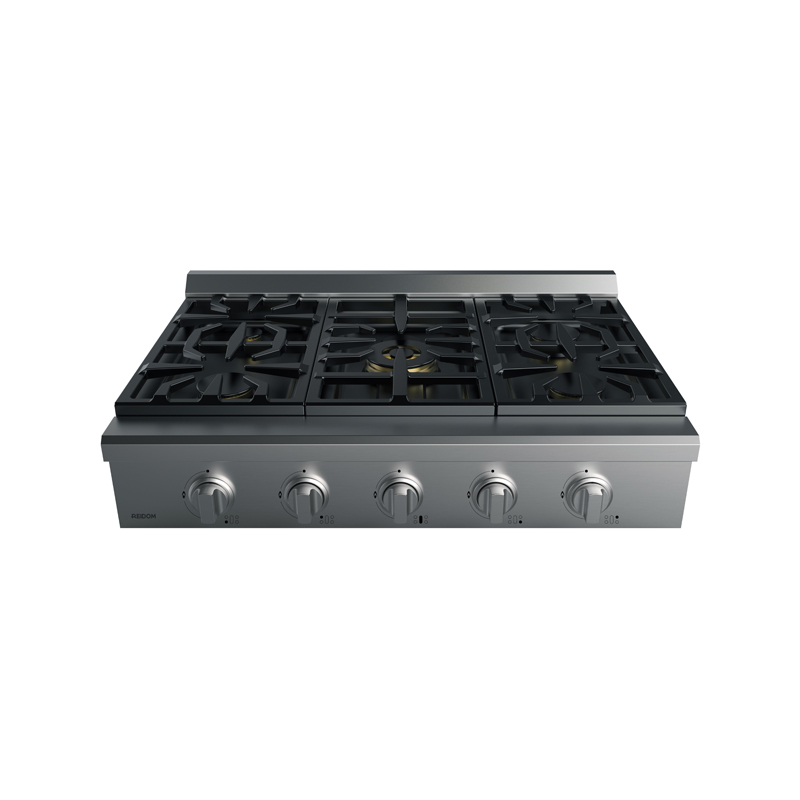 Z36A2-5 Heavy Duty Dual Burner Range Top with Cast Iron GratesThis 36-inch rangetop offers flexible burner placement while leaving the space below open for drawers or a separate oven, making it a practical choice when you prefer a split cooktop and oven setup.View Product →
If you are choosing between a bare cooking surface and a full range, our comparison of the difference between a gas rangetop and a range explains how burner layout, oven needs, and utility hookups change the decision.
What Is a Range?
A range is a single free-standing or slide-in appliance that puts the cooking surface on top and the oven directly underneath. Standard widths in the professional market are 30, 36, and 48 inches, with oven capacities ranging from about 4.6 cubic feet on a 30-inch model to 7 cubic feet on a 48-inch model.
Ranges can be all-gas, electric, or dual-fuel. All-gas units use gas for both burners and oven. Dual-fuel models use gas burners with an electric oven, which gives chefs fast flame control plus more even baking temperatures. Electric ranges are common where gas is not available.
The strength of a range is that it does everything in one footprint. One gas or electrical connection, one venting requirement, and one installation crew. It is also almost always cheaper than a cooktop plus a wall oven of similar capacity. The limitation is rigidity: the burner arrangement is fixed, the oven sits low, and when the oven needs service, the burners are out of action as well.
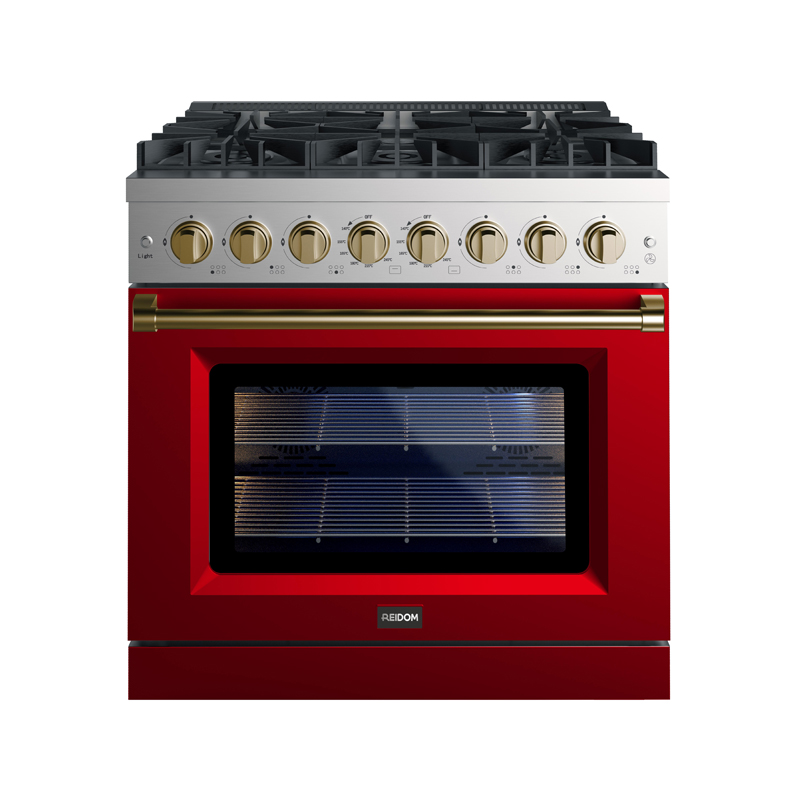 Reidom 36-Inch All Gas Range with 5 Burners and Convection OvenThis gas range combines a five-burner cooktop and a 5.5 cubic foot convection oven in one footprint, suiting kitchens where a single appliance with one hookup is simpler and more economical than separate units.View Product →
Cooktop vs Range: Key Differences at a Glance
These are the differences that matter when you put a cooktop and a range side by side for a real kitchen project.
| Factor | Cooktop | Range |
|---|---|---|
| Installation | Cutout in countertop; separate wall oven required | Single floor-standing unit; one gas or electric connection |
| Oven included | No | Yes |
| Layout flexibility | High; can be placed in islands and custom stations | Low; fixed cooktop and oven footprint |
| Space efficiency | Cooktop plus separate oven takes more total space | Compact; one unit handles both functions |
| Typical up-front cost | Higher when wall oven and cutout are included | Lower for equivalent burner count |
| Venting | Wall, island, or downdraft hood matched to cooktop width | Range hood or downdraft matched to range width |
| Best for | Custom kitchens, islands, kitchens with existing wall ovens | Small kitchens, quick installs, high-volume cooking lines |
Rule of thumb: if the oven belongs under the cooking surface and you want the fastest installation, choose a range. If the cooking surface must stand alone or the oven already exists elsewhere, choose a cooktop.
How to Choose Between a Cooktop and a Range
There is no single winner in the cooktop vs range debate. Work through these five questions and the right configuration becomes obvious.
- Where must the oven be? If the oven is used every day for roasting or baking at the same station, a range keeps everything within reach. If the oven belongs on a back wall or at waist height, a cooktop plus wall oven makes more sense.
- Is the cooking surface in an island? Ranges cannot float in open space. An island station requires a cooktop with a matching island range hood or an effective downdraft system.
- What fuel and power are available? Gas lines, 220V circuits, and induction requirements all affect the choice. Dual-fuel ranges solve the common problem of gas burners with a better electric oven.
- How will the space be vented? Both configurations need a correctly sized hood. A 36-inch cooktop or range typically pairs with a 36-inch hood at the right CFM for the room volume and cooking load.
- What is the total budget? A cooktop plus wall oven and countertop cutout usually costs noticeably more than a comparable range. For multi-station commercial kitchens, that difference multiplies quickly.
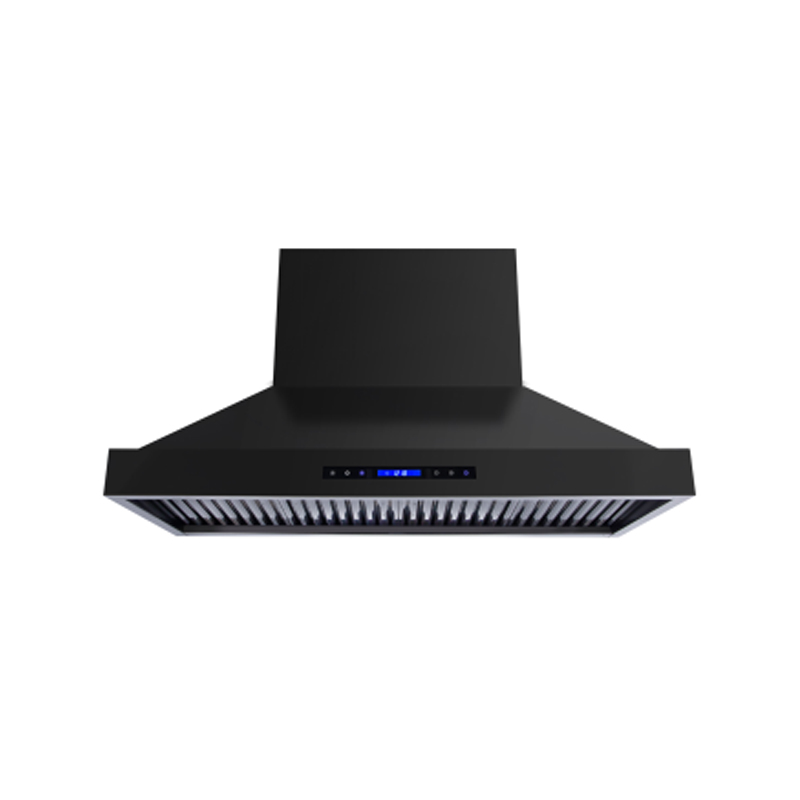 Reidom 36-Inch Stainless Steel Tower Range Hood with Touch ControlsThis wall-mount tower hood uses body-sense and touch buttons, with washable stainless steel baffle filters, providing effective ventilation for a 36-inch cooking surface, whether paired with a range or rangetop.View Product →
For most compact kitchens and high-volume cooking stations, a range is the faster, more economical route. For designer projects and flexible cooking lines, a cooktop with a separate oven is worth the extra installation work.
Cooktop vs Range in Real Projects
Here is how the choice plays out in common projects:
- A 20-seat café needs two cooking stations fast. Two 30-inch all-gas ranges install quickly and give each line its own oven.
- A premium home kitchen with an island uses a 36-inch gas cooktop and a wall-mount hood above it, with a separate wall oven on the back wall.
- A high-volume restaurant line depends on constant sautéing and roasting. A 36-inch or 48-inch dual-fuel range keeps flames and oven temperature stable for hours.
- A catering company already owns commercial convection ovens. Adding a 48-inch rangetop gives flexible burner capacity without duplicating ovens.
The pattern is consistent: a range wins when you want one connected appliance with an oven and a simple footprint; a cooktop wins when the oven lives separately and the cooking surface has to be positioned on its own.
Frequently Asked Questions About Cooktops and Ranges
Q1: Can I use a cooktop without a separate oven?
Yes. A cooktop is a complete cooking surface. If the kitchen already has a wall oven, convection oven, or microwave, a cooktop gives you burners without adding another oven. Many island kitchens and catering setups work this way.
Q2: Is a range cheaper than a cooktop plus wall oven?
In most cases, yes. A range combines both functions in one cabinet with one set of connections. A cooktop plus wall oven adds a second appliance, a countertop cutout, and extra labor. The price gap can be significant in commercial quantities.
Q3: Which is better for a kitchen island, a cooktop or a range?
A cooktop is better for islands because a range is a floor-standing appliance with an oven underneath and cannot sit in open space. Pair the island cooktop with an island range hood that has enough CFM for the burner output, since downdraft systems are less effective with rising smoke.
Q4: What is the standard size for a commercial range or cooktop?
The standard widths are 30, 36, and 48 inches. A 36-inch range is the most common choice for restaurant lines because it matches standard hood widths and supports continuous cooking. A 48-inch range adds a larger oven, usually around 7 cubic feet, for roasted and baked menu items.
The cooktop vs range decision starts with one question: where does the oven need to be? If it belongs beneath the burners and the installation should be fast and economical, buy a range. If the cooking surface must be independent or the oven already exists, buy a cooktop and pair it with the right hood.
Reidom manufactures professional ranges, rangetops, and range hoods in 30-, 36-, and 48-inch sizes with gas, electric, and dual-fuel configurations. OEM and ODM projects are welcome, so the final spec can match your target market exactly.
