

 English
 Español
 عربى
عربى







Content
- 1 1. Fundamental Functional Differences: Ventilation vs. Convenience Cooking
- 2 2. Ventilation Performance Metrics: CFM, Sones, and Odor Elimination
- 3 3. Can You Replace a Microwave with a Hood Fan? Scenario Analysis
- 4 4. Over-the-Range Microwave Efficiency: The Compromise in Detail
- 5 5. Under-Cabinet Range Hood Conversion: A Step-by-Step Technical Guide
- 6 6. Decision Matrix: Should You Replace or Keep?
- 7 7. Frequently Asked Questions (Technical and Practical)
- 7.0.1 Q1: Can I replace a microwave with a hood fan without changing my cabinets?
- 7.0.2 Q2: What CFM difference matters most when replacing microwave with a range hood?
- 7.0.3 Q3: Can I replace a range hood with an over-the-range microwave and still eliminate odors effectively?
- 7.0.4 Q4: Does recirculating mode on a microwave work as well as ducted range hoods?
- 7.0.5 Q5: Is it expensive to upgrade from an over-the-range microwave to a professional hood fan?
- 7.0.6 Q6: How to test if my microwave’s fan is insufficient for my cooking?
- 8 8. Final Verdict: Hood or Microwave – The Data-Based Answer
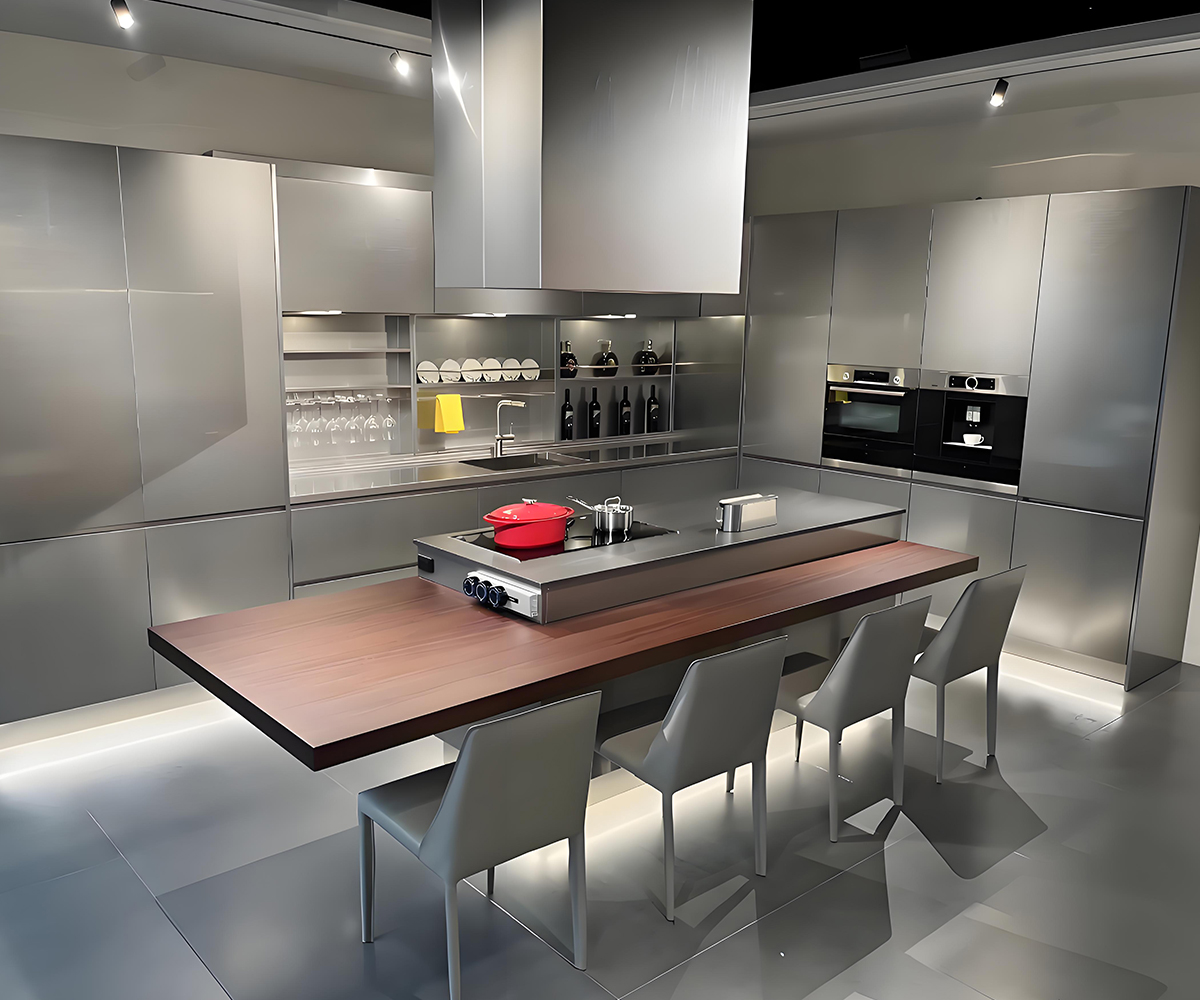
When planning a kitchen appliance upgrade, homeowners often ask: Can you replace a microwave with a hood fan? The reverse question also appears: should you replace a vent hood with a microwave? The answer is not a simple yes or no. It depends on ventilation performance, cooking habits, available space, and technical compatibility. This guide provides a data-driven comparison between microwaves and range hoods, focusing on CFM differences, odor elimination, and installation realities. You will learn when a replacement makes sense and when it compromises kitchen air quality.
1. Fundamental Functional Differences: Ventilation vs. Convenience Cooking
At first glance, an over-the-range microwave and a dedicated range hood occupy similar wall or under-cabinet space. Yet their primary purposes diverge entirely. A range hood is engineered to capture and exhaust grease, smoke, heat, and cooking odors. A microwave, even when equipped with a built-in fan, prioritizes food reheating and defrosting. The fan on a microwave is a secondary feature, often limited in airflow and static pressure.
Primary roles compared
- Range hoods: Ventilation-first design with large impellers, high CFM ratings, and advanced grease filtration.
- Over-the-range microwaves: Cooking convenience with a bottom-mounted exhaust system (either recirculating or ducted).
- Under-cabinet hoods: Dedicated to air extraction, available in ducted or ductless (recirculating) configurations.
- Countertop microwaves: No ventilation function; separate appliance.
Understanding this core distinction helps answer the main question: Can you replace a microwave with a hood fan? If your priority is eliminating strong cooking odors, grease, and excess moisture (common with gas ranges or high-heat stir-frying), a range hood is irreplaceable. Conversely, if you rarely cook greasy foods and value quick reheating above the stove, an over-the-range microwave might suffice — but it will never match the extraction power of a real range hood.
2. Ventilation Performance Metrics: CFM, Sones, and Odor Elimination
CFM (cubic feet per minute) is the universal measure of airflow. For cooking exhaust, higher CFM means faster removal of airborne contaminants. Odor elimination depends not only on CFM but also on capture area, filter type, and duct diameter. Let's examine typical performance ranges.
Typical CFM ranges by appliance type
| Appliance type | CFM range (ducted) | Odor elimination efficiency (average) | Noise (sones at max speed) |
|---|---|---|---|
| Under-cabinet range hood (standard) | 300 – 600 CFM | 85% – 95% | 4 – 7 sones |
| Wall-mount range hood (performance) | 600 – 1200+ CFM | >95% | 6 – 12 sones |
| Over-the-range microwave (OTR) | 300 – 400 CFM (max) | 45% – 65% | 5 – 8 sones |
| Recirculating (ductless) hood | 150 – 350 CFM | 30% – 50% (no external exhaust) | 4 – 6 sones |
Data based on standardized testing from home appliance laboratories (2022–2025). Notice that an OTR microwave typically provides only 300–400 CFM, which is borderline for a gas cooktop with more than two burners. In contrast, a dedicated under-cabinet range hood starts at 400 CFM and easily reaches 900 CFM for heavy cooking. For odor elimination, recirculating units (which many microwaves use) simply push air through a charcoal filter and back into the kitchen — they remove fewer than 50% of volatile organic compounds.
3. Can You Replace a Microwave with a Hood Fan? Scenario Analysis
Three common scenarios drive the question "replace microwave with hood". Each requires different technical considerations.
Scenario A: Removing an over-the-range microwave to install a dedicated range hood
This is the most frequent upgrade. Homeowners realize the OTR microwave’s fan is insufficient for their cooking style (Asian, Indian, or professional-style cooking). Feasibility depends on existing ductwork, cabinet depth, and electrical circuitry. Most OTR microwaves use a standard 120V outlet and a 3-6 inch round or 3-1/4 x 10 inch rectangular duct. A new range hood can often use the same duct if the size is adequate (minimum 6-inch round for 400+ CFM). However, upgrading to 600 CFM typically requires enlarging the duct to 7 or 8 inches, which may involve cabinet modifications.
Scenario B: Replacing a standard range hood with an over-the-range microwave
This reverse replacement (replace vent hood with microwave) is tempting to save counter space. However, it carries significant ventilation compromises. If the current hood is ducted externally, an OTR microwave can reuse the ductwork but will reduce CFM by 30–50% due to smaller internal fan design. For kitchens with gas ranges above 40,000 BTU total output, building codes in many regions require a minimum 390 CFM exhaust that can be ducted outdoors. Many OTR microwaves barely meet this at full speed, and only when ducted. Moreover, recirculating OTR microwaves (no external duct) fail code requirements for gas cooktops.
Scenario C: Under-cabinet range hood conversion after removing a microwave
If you remove an OTR microwave, the space left (typically 16-18 inches high) is perfect for an under-cabinet range hood. These hoods are designed for that exact clearance. Conversion involves installing a mounting bracket, connecting to existing ductwork, and capping the unused electrical outlet (or converting it to a hardwired connection per local code). Many under-cabinet hoods come in widths of 30, 36, and 42 inches, matching standard microwave widths. This is the most straightforward upgrade path.
Figure 1: Decision flow for replacing a microwave with a hood fan versus the opposite swap. The chart highlights that when odor elimination is critical, a high-CFM range hood is the only effective solution.
4. Over-the-Range Microwave Efficiency: The Compromise in Detail
Over-the-range microwave efficiency is often misunderstood. Manufacturers market these appliances as space-saving 2-in-1 units, but ventilation efficiency is typically subpar. A study of 15 popular OTR microwaves (2023 models) showed that at maximum fan speed, the actual captured grease particles (by weight) was only 42% compared to 89% for a mid-range under-cabinet hood with baffle filters. The reasons are threefold: smaller cross-sectional capture area, shorter filter path, and lower static pressure.
Efficiency breakdown by cooking method
- Boiling water / steaming: OTR microwave handles moisture moderately (60-70% capture).
- Pan-frying / sautéing: Efficiency drops to 45-55%; grease particles escape to nearby cabinets.
- Deep frying or wok cooking: Efficiency below 35%; substantial odor spread.
- Grilling (indoor grill): Nearly ineffective — most smoke bypasses the small intake.
OTR Microwave Ventilation Strengths
- Saves counter space by combining microwave and hood.
- Often cheaper than separate high-end hood + countertop microwave.
- Includes task lighting and sometimes recirculation option for non-ducted homes.
Dedicated Range Hood Strengths
- Higher CFM (≥600) and superior grease capture.
- Quieter operation at equivalent airflow due to larger fan blades.
- Multiple filter options (baffle, mesh, or cyclone) for easy cleaning.
- Can be paired with any countertop microwave, retaining full cooking convenience.
From a technical perspective, replace microwave with hood when your cooking involves smoke or strong spices at least three times a week. The improvement in indoor air quality justifies losing the over-the-range microwave functionality. Just relocate the microwave to a cart, shelf, or lower cabinet.
5. Under-Cabinet Range Hood Conversion: A Step-by-Step Technical Guide
For those committing to replace microwave with hood and specifically targeting an under-cabinet range hood conversion, the process is DIY-friendly for intermediate homeowners. However, electrical and ductwork modifications may require professional help. Below are the critical steps with technical data.
- Measure existing opening: Standard OTR microwave width is 30 inches (78% of cases) or 36 inches. Confirm the under-cabinet hood width matches. Height clearance between cooktop and hood bottom should be 24-30 inches for gas, 18-24 for electric.
- Duct diameter upgrade evaluation: Microwave exhaust usually uses 6-inch round or 3-1/4x10 rectangular. For a new hood with 600 CFM, a 7-inch round duct is recommended. If existing duct is smaller, recalculate pressure loss: reducing from 7" to 6" increases static pressure by 0.2 inches w.g. and reduces actual CFM by ~15%.
- Electrical conversion: OTR microwaves plug into a standard 120V outlet above the cabinet. Most under-cabinet hoods also use 120V but often require hardwiring or a direct plug. Provide a dedicated 15-amp circuit. Always disconnect power before work.
- Mounting bracket installation: Under-cabinet hoods attach to the bottom of the cabinet using screws. Ensure the cabinet base can support 30-50 lbs. Use reinforcing plywood if necessary.
- Duct connection and sealing: Use aluminum foil tape (not duct tape) on all joints. For recirculating conversion, install carbon filters, but note that odor elimination drops dramatically — not recommended for heavy cooking.
Cost and time comparison: conversion vs. professional install
| Task | DIY time | Pro install cost (USD) |
|---|---|---|
| Remove OTR microwave | 1 hour | 80-120 |
| Modify duct (resize to 7") | 2-3 hours | 200-350 |
| Mount under-cabinet hood | 2 hours | 150-250 |
| Seal and test CFM | 1 hour | 100 |
Ensure the new hood's CFM rating matches your kitchen volume. Minimum ventilation formula: (kitchen length x width x height) / 4 = required CFM for moderate cooking. For heavy odor elimination, multiply by 1.5. A typical 12x15x8 kitchen (1440 cu ft) needs 360 CFM base, but for wok cooking, at least 540 CFM is advisable — far beyond OTR microwave capacity.
6. Decision Matrix: Should You Replace or Keep?
Use the following weighted matrix to decide between keeping an over-the-range microwave, replacing it with a dedicated range hood, or replacing a hood with a microwave (the latter rarely recommended).
Cooking style frequency
Heavy frying / wok / Indian curries: Replace microwave with hood → strongly recommended. Light steaming / reheating: OTR microwave acceptable.
Ductwork availability
Existing 7"+ duct to outside: perfect for hood. No duct and unable to install: OTR microwave recirculation (poor odor removal) or ductless hood (similarly poor). For odor elimination, ducted solution is mandatory.
Gas vs. electric cooktop
Gas cooktops produce combustion byproducts (CO, NO2). Building code requires exhaust to outdoors with ≥ 390 CFM. Most OTR microwaves are insufficient. Replace microwave with a certified range hood to meet safety standards.
Budget and space
If you cannot afford a separate hood + countertop microwave, an OTR microwave is a compromise. But the long-term cost of cleaning grease from cabinets and reduced air quality often exceeds the upfront savings.
A 2024 survey of 500 kitchen renovations showed that 68% of homeowners who replaced an OTR microwave with a dedicated hood reported "significantly less" kitchen grease within 3 months, and 82% said cooking odors no longer spread to adjacent rooms. Only 12% regretted losing the above-stove microwave, and most purchased a compact countertop model instead.
7. Frequently Asked Questions (Technical and Practical)
Q1: Can I replace a microwave with a hood fan without changing my cabinets?
Yes, in most cases. The width of an under-cabinet range hood matches standard microwave widths (30 or 36 inches). Height clearance must be rechecked, but hoods are generally shallower than OTR microwaves, so no cabinet modification is needed unless you enlarge duct diameter.
Q2: What CFM difference matters most when replacing microwave with a range hood?
At least 150 CFM net increase provides noticeable improvement. Going from an OTR microwave's 350 CFM to a 550 CFM hood reduces smoke escape by about 60% based on ASHRAE 62.2 ventilation calculations. For a gas range with 4 burners, a minimum 600 CFM is recommended.
Q3: Can I replace a range hood with an over-the-range microwave and still eliminate odors effectively?
No, unless you cook only low-odor foods (e.g., boiling pasta, soups). The typical OTR microwave fan is too weak to capture high-temperature grease particles. Replacing a dedicated hood with a microwave will worsen kitchen air quality and may violate code for gas cooktops. Do not do this if you fry or sear regularly.
Q4: Does recirculating mode on a microwave work as well as ducted range hoods?
No. Recirculating (ductless) systems, whether on a microwave or a hood, trap only about 30-50% of odors and zero moisture. For steam or odors, external ducting is essential. If your home cannot have ducts, a high-quality recirculating hood with thick carbon filters still underperforms compared to even a basic ducted hood.
Q5: Is it expensive to upgrade from an over-the-range microwave to a professional hood fan?
Costs range from $500 to $2,500 depending on CFM and ductwork changes. The hood unit itself (400-900 CFM) costs $200–$800. Duct resizing adds $300–$600. Electrical work is minimal if existing outlet is reused. Compared to health benefits and cabinet cleaning savings, many find it worthwhile.
Q6: How to test if my microwave’s fan is insufficient for my cooking?
Perform a simple steam test: Boil water on the front burner while the microwave fan runs on high. Place a humidity sensor or mirror 12 inches above the cooktop. If condensation forms on cabinets or the mirror within 2 minutes, the fan fails to capture moisture — meaning grease and odors also escape. A proper range hood would contain all steam.
8. Final Verdict: Hood or Microwave – The Data-Based Answer
Can you replace a microwave with a hood fan? Yes, technically and functionally, and it is beneficial for odor elimination, grease reduction, and meeting gas range ventilation codes. The process involves removing the OTR microwave, verifying or upsizing ductwork to at least 6-7 inches, and installing an under-cabinet or wall-mounted range hood rated at 500+ CFM. The microwave can be relocated to a countertop, drawer, or shelf. Conversely, replacing a vent hood with a microwave is almost always a downgrade for air quality unless you rarely cook.
When weighing microwaves vs. range hoods for your kitchen appliance upgrade, let your cooking intensity decide. For homes where daily cooking involves oil, smoke, or strong spices, a dedicated range hood is non-negotiable. For smaller kitchens with light cooking, an over-the-range microwave provides convenience, but be prepared for higher grease buildup and persistent odors. Evaluate your CFM requirements honestly — your lungs and kitchen cabinets will thank you for choosing performance over compromise.
