

 English
 Español
 عربى
عربى







Content
- 1 Understanding Airflow Volume in Kitchen Ventilation
- 2 The Engineering Behind CFM and Airflow Dynamics
- 3 Converting British Thermal Units (BTUs) to CFM
- 4 Ventilation Demands for Professional Ranges
- 5 Open-Concept Kitchen Airflow and Spatial Volume
- 6 Physical Positioning and Capture Efficiency
- 7 Filtration Mechanics and Acoustic Management
- 8 Frequently Asked Questions Regarding Kitchen Ventilation
- 8.0.1 Q1: Can a range hood possess too much CFM capacity for a residential kitchen space?
- 8.0.2 Q2: What is the primary operational difference between baffle filters and mesh filters?
- 8.0.3 Q3: Is it possible to install a 600 CFM range hood utilizing a ductless or recirculating configuration?
- 8.0.4 Q4: How frequently should commercial-grade baffle filtration systems be cleaned?
- 8.0.5 Q5: How does ductwork diameter affect the actual delivered CFM of an extraction fan?
Understanding Airflow Volume in Kitchen Ventilation
Kitchen ventilation stands as a critical cornerstone in modern residential architecture and culinary design. When operating high-performance cooking appliances, managing the byproducts of heat, moisture, grease, and combustion gases becomes a primary functional requirement. To achieve effective air containment, specifying the precise volume of air moved out of the cooking environment is essential.
The core metric used to evaluate the capacity of range hoods is Cubic Feet per Minute, universally abbreviated as CFM. This measurement represents the volume of air a ventilation fan can move or exchange within sixty seconds. Understanding what is cfm in fans provides the technical foundation necessary to select, install, and operate a system that maintains indoor air quality during intensive cooking processes.
When upgrading to high-output cooking systems, standard residential extraction rates are frequently insufficient. Premium culinary setups generate substantial thermal currents that demand rigorous mechanical management. Consequently, matching the extraction rate to the potential energy output of the appliance prevents grease accumulation, eliminates persistent odors, and mitigates structural moisture risks over extended operational periods.
The Engineering Behind CFM and Airflow Dynamics
To grasp the importance of air exchange rates, one must analyze the mechanical variables that govern indoor air movement. A ventilation fan functions by creating a localized low-pressure zone directly above the cooking surface. This pressure differential forces contaminated air upward into the filtration matrix, where particulate matter is extracted before the air is either exhausted outside or recirculated.
Static Pressure and Resistance Factors
The nominal CFM rating provided by component manufacturers reflects air movement under ideal, zero-resistance laboratory conditions. However, real-world installations introduce static pressure resistance that degrades actual operational performance. Factors influencing true airflow efficiency include:
- Ductwork Geometry: Every ninety-degree turn or transition section creates turbulence, increasing resistance and reducing the effective volumetric flow rate.
- Duct Diameter and Material: Smooth-walled rigid metal ducting facilitates linear airflow, whereas flexible corrugated ducting increases friction losses significantly.
- Filtration Systems: High-density baffle filters extract grease efficiently but require greater mechanical force to pull air through compared to lightweight mesh variants.
Understanding these variables highlights why selecting the correct cfm for range hood mechanisms cannot rely solely on the minimum theoretical requirements of the cooking appliance. System resistance must be accounted for during the initial design phase to guarantee sufficient real-world extraction.
Converting British Thermal Units (BTUs) to CFM
Gas-powered cooking appliances rely on combustion to generate thermal energy, which is measured globally in British Thermal Units per hour. Because gas combustion releases water vapor, carbon dioxide, and potentially carbon monoxide, ventilation requirements must scale linearly with the total potential heat output of the burner grid.
The Technical Standard for Gas Ventilation
The established engineering benchmark for gas-fueled cooking equipment dictates that a ventilation system should provide one CFM of extraction capacity for every one hundred BTUs of total burner output. This ensures that the thermal plume rising from the range is captured completely before expanding into the surrounding architectural space.
To calculate the baseline demand for a specific appliance configuration, use the following structured methodology:
- Identify the maximum BTU rating for every individual burner located on the cooking surface.
- Sum these values together to establish the maximum aggregate thermal output potential.
- Divide the aggregate sum by one hundred to determine the absolute minimum CFM threshold.
Applying this formula ensures that even when operating multiple burners simultaneously at full capacity, the range hood possesses sufficient volumetric power to capture the resultant exhaust stream effortlessly.
Ventilation Demands for Professional Ranges
Heavy-duty professional ranges feature high-output burners, integrated griddles, or infrared broilers that produce significantly more heat and particulate matter than standard residential models. Consequently, standard multi-speed under-cabinet fans are entirely inadequate for these systems.
Determining How Many CFM for Range Hood Units Paired with Heavy-Duty Ranges
For high-performance installations, professional culinary ranges generally demand air moving capacities starting at a baseline of 600 CFM, frequently scaling up to 1200 CFM or greater depending on the width and energy source of the appliance. A 600 cfm range hood serves as the industry entry point for mid-sized luxury configurations, providing the necessary static pressure tolerance to pull heavy grease plumes through multi-layered stainless steel baffle filtration systems.
When selecting a high-capacity extraction unit, understanding the precise relationship between appliance size, output style, and necessary volumetric performance prevents shortfalls in structural air management. The table below illustrates standard industry recommendations for matching appliance configurations with appropriate volumetric air capacities:
| Appliance Width | Fuel Configuration | Total Energy Output Range | Recommended Volumetric Capacity |
|---|---|---|---|
| 30 Inches | Electric Radiant / Induction | Not Applicable (Surface-Based) | 300 to 450 CFM |
| 30 Inches | Standard Gas Range | 35,000 to 45,000 BTUs | 450 to 600 CFM |
| 36 Inches | Pro-Style Gas Range | 60,000 to 75,000 BTUs | 600 to 900 CFM |
| 48 Inches | Dual-Fuel Pro Range with Griddle | 95,000 to 120,000 BTUs | 900 to 1200 CFM |
| 60 Inches | Double Oven Pro Range (Heavy Use) | 130,000 to 160,000 BTUs | 1200 to 1500 CFM |
Open-Concept Kitchen Airflow and Spatial Volume
While the thermal output of the cooking appliance provides the primary baseline for calculating range hood CFM, architectural layout and total room volume play crucial secondary roles. Modern residential floor plans increasingly favor open-concept layouts, where the culinary workspace merges directly with living and dining zones. This layout eliminates physical barriers, allowing airborne particulates and thermal plumes to disperse rapidly if not contained immediately at the source.
The Air Exchange Rate Method
In addition to the BTU-based calculation, mechanical engineers frequently utilize the Air Exchange Rate method to verify system efficacy in open environments. This approach specifies that a dedicated extraction system should be capable of completely exchanging the total volume of air within the kitchen area approximately fifteen times per hour. This continuous cycling maintains a clean environment and prevents grease droplets from settling onto furniture, textiles, and wall surfaces located deep within adjacent living zones.
When high-performance cooking ventilation operates within tightly sealed, modern energy-efficient homes, an extracting force exceeding 600 CFM can generate significant negative pressure. In these situations, the exhaust system pulls air out faster than it can naturally seep back into the structure. This imbalance can lead to backdrafting, drawing dangerous combustion gases down water heater or fireplace flues. To prevent this hazard, mechanical building codes often mandate the installation of integrated makeup air systems. These automated dampers open concurrently with the range hood to supply fresh, tempered exterior air, balancing internal pressures perfectly.
Physical Positioning and Capture Efficiency
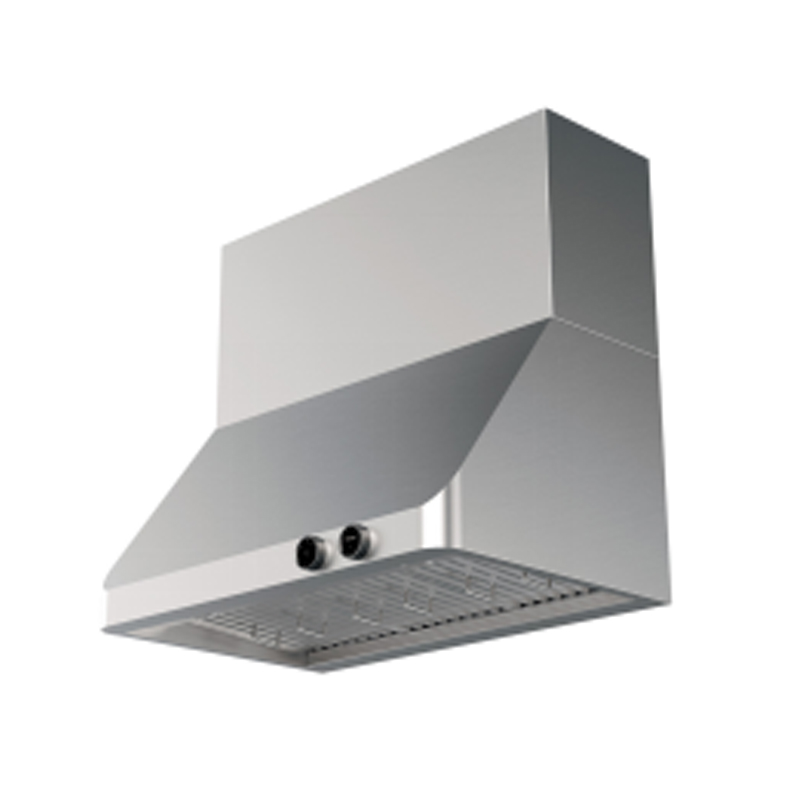
Volumetric power alone cannot guarantee flawless pollutant capture; physical positioning and hood geometry are equally critical factors. The relationship between the cooking surface and the lower edge of the extraction canopy dictates how effectively the rising thermal plume is contained.
Proximity and Dimensions
For standard wall-mounted or island configurations paired with professional ranges, the optimal mounting height typically ranges between thirty and thirty-six inches above the cooking plane. Mounting the unit lower risks heat damage to internal electronic components and restricts physical movement for the chef. Conversely, mounting the hood higher than thirty-six inches allows crosscurrents in room air to deflect the rising smoke plume away from the filtration intake, requiring an oversized fan to compensate.
Furthermore, structural capture efficiency relies heavily on the physical dimensions of the canopy. The hood should ideally extend an extra three inches beyond each exposed lateral side of the cooking surface. This overhang creates a functional collection reservoir that holds sudden bursts of steam or smoke before the mechanical fan draws them into the primary ductwork layers.
Filtration Mechanics and Acoustic Management
High-CFM ventilation systems require robust mechanical filters to extract grease vapor from high-velocity air streams. For systems operating above 600 CFM, commercial-grade stainless steel baffle filters are the standard choice. These assemblies consist of interlocking curved plates that force incoming air to change direction rapidly. Because grease droplets possess higher momentum than air molecules, they cannot negotiate these quick directional changes; instead, they collide with and condense onto the metal baffles, eventually draining into a removable collection trough.
Acoustic output is measured globally in sones, a linear unit of perceived loudness. A rating of one sone approximates the sound of a modern refrigerator running in a quiet room, whereas eight sones can approach the noise level of heavy traffic. To maintain acoustic comfort while using high-CFM range hoods, designers often specify inline external blowers. By relocating the motorized fan mechanism out of the kitchen canopy and positioning it further up the duct run or on an exterior roof line, internal ambient noise drops dramatically while maintaining maximum volumetric flow at the cooking surface.
Frequently Asked Questions Regarding Kitchen Ventilation
Q1: Can a range hood possess too much CFM capacity for a residential kitchen space?
Yes. Selecting an excessively powerful extraction system without providing adequate makeup air can create serious negative pressure conditions. This imbalance can cause backdrafting in gas water heaters or furnaces, pulling toxic combustion products back into living spaces. Additionally, it can reduce HVAC efficiency by rapidly exhausting conditioned indoor air outside.
Q2: What is the primary operational difference between baffle filters and mesh filters?
Stainless steel baffle filters force airflow through a series of sharp directional changes to extract heavy grease droplets, offering high durability and dishwasher-safe maintenance ideal for high-heat cooking. Aluminum mesh filters rely on layered, porous screens to catch particles through direct contact; however, they clog more quickly and can restrict high-velocity airflow if not cleaned regularly.
Q3: Is it possible to install a 600 CFM range hood utilizing a ductless or recirculating configuration?
It is highly discouraged. Recirculating configurations route air through charcoal media to capture odors before returning it directly to the kitchen. These dense carbon filters create high static resistance that drastically reduces net airflow, making them inefficient at handling the large volumes of heat and moisture produced by high-output appliances.
Q4: How frequently should commercial-grade baffle filtration systems be cleaned?
For residential setups paired with high-performance ranges, cleaning baffle filters every four to six weeks is recommended. If your cooking style involves frequent searing, frying, or wok techniques, cleaning them every two weeks ensures unhindered airflow and prevents accumulated grease from posing a fire hazard.
Q5: How does ductwork diameter affect the actual delivered CFM of an extraction fan?
Duct diameter directly impacts air velocity and resistance. A high-capacity fan rated between 600 and 900 CFM typically requires a round duct diameter of at least eight inches, while 1200 CFM systems often need ten-inch ducting. Restricting a high-output fan to a smaller six-inch duct increases static pressure, which significantly drops extraction performance and raises operational noise levels.
