

 English
 Español
 عربى
عربى







Content
- 1 How Regular Maintenance Extends the Service Life of a Kitchen Range Hood
- 2 What Service Issues Come Up Most Often
- 3 Why Range Hood Light Bulbs Fail Faster Than Expected
- 4 How to Clean Baffle and Mesh Filters Properly
- 5 Comparing Filter Types Across Key Performance Factors
- 6 Troubleshooting a Range Hood Touch Control Panel
- 7 Building a Practical Maintenance Schedule
- 8 Frequently Asked Questions About Range Hood Maintenance
- 8.0.1 Q1: How often should range hood filters actually be cleaned?
- 8.0.2 Q2: Can any LED bulb replace the original hood light?
- 8.0.3 Q3: Why does the touch control panel stop responding after cleaning?
- 8.0.4 Q4: Is it safe to run a range hood with a heavily clogged filter?
- 8.0.5 Q5: How long should a well maintained range hood last overall?
How Regular Maintenance Extends the Service Life of a Kitchen Range Hood
A kitchen exhaust system works harder than almost any other appliance in the home. Every frying session, every simmering sauce, and every seared steak sends a mix of grease particles, moisture, and airborne residue directly into the intake path. Over months of daily cooking, that residue settles on filters, coats the fan housing, and eventually dulls the light output of the bulb assembly. Understanding how to service these components correctly is what separates a unit that performs well for a decade from one that struggles after eighteen months.
Modern range hoods combine several serviceable parts: a filtration layer, a lighting module, a blower motor, and in many current models, a touch-sensitive control panel. Each part ages differently, and each responds to a different maintenance rhythm. This guide walks through the practical steps for keeping every one of those systems working as intended, based on typical usage patterns observed across residential kitchens.
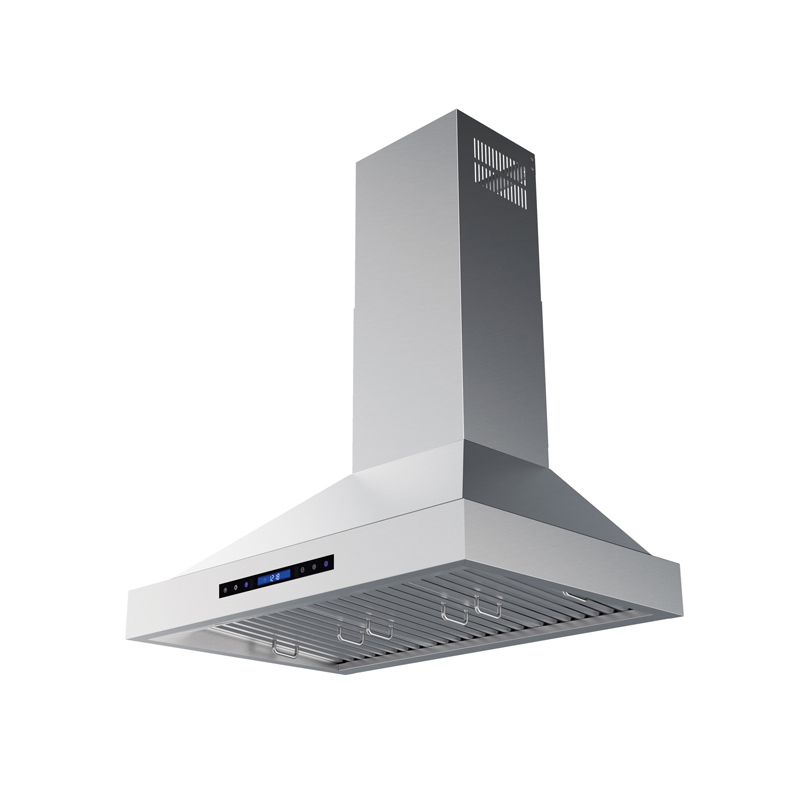
The sections below cover filter cleaning intervals, light replacement procedures, control panel troubleshooting, and the data behind why maintenance timing matters more than most homeowners assume.
What Service Issues Come Up Most Often
Across service logs collected from kitchen appliance technicians, a handful of issues account for the overwhelming majority of range hood callouts. Lighting failures and filter saturation top the list, followed by control panel unresponsiveness and motor noise. The chart below summarizes the relative frequency of each issue type reported during routine kitchen appliance inspections.
Two of these categories, lighting and filtration, are also the two most preventable through simple homeowner maintenance rather than professional service calls. Understanding stainless steel wall mount range hood component layouts helps clarify why these particular parts fail first: they sit closest to the direct path of rising heat, steam, and airborne grease.
Why Range Hood Light Bulbs Fail Faster Than Expected
Homeowners often assume a burnt-out hood light indicates a wiring fault, but in most cases the bulb itself has simply reached the end of its rated life faster than expected because of heat exposure. Hood cavities run consistently warmer than open-air fixtures elsewhere in the kitchen, and that ambient heat shortens the effective lifespan of many bulb types.
Comparing Bulb Lifespan by Type
An LED module rated for roughly twenty five thousand hours will typically outlast several generations of halogen or incandescent replacements, which explains why range hood light bulb replacement has shifted almost entirely toward LED options in recent product cycles. When a bulb does need replacing, the process is straightforward on nearly every hood design:
- Disconnect power at the wall switch or breaker before opening the light lens cover.
- Remove the lens cover, which is usually held by two spring clips or small screws along the edge.
- Turn the old bulb counterclockwise for standard sockets, or unclip it directly for surface mounted LED pucks.
- Match the replacement wattage and base type exactly to the specification printed near the socket.
- Reinstall the lens cover and restore power, then test the light before closing up the work area.
If a newly installed bulb still fails to light, the issue is more likely a socket connection or a control board fault rather than the bulb itself, and that points toward the touch control troubleshooting steps covered later in this guide.
How to Clean Baffle and Mesh Filters Properly
Grease filtration is the first line of defense for the internal motor and ductwork, and it is also the component that accumulates residue fastest. Two filter types dominate current hood designs: stainless steel baffle filters, which use angled metal slats to trap grease through directional airflow, and aluminum mesh filters, which rely on layered fine screens.
Baffle Filter Cleaning Steps
Stainless steel baffle filter cleaning is best handled with a degreasing soak rather than a quick wipe, since grease hardens within the angled channels over time.
| Step | Action | Recommended Frequency |
|---|---|---|
| 1 | Remove filter and pre-rinse with hot water | Every use cycle |
| 2 | Soak in degreasing solution for 15 to 20 minutes | Every 2 to 4 weeks |
| 3 | Scrub angled slats with a soft brush | Same as soak cycle |
| 4 | Rinse thoroughly and air dry before reinstalling | Every cleaning |
| 5 | Deep clean or replace if warped or discolored | Every 12 to 18 months |
Many baffle filters are dishwasher safe on a high heat cycle, which makes clean range hood grease filters a low-effort task for kitchens with heavy daily cooking. Mesh filters generally need slightly more frequent attention because the fine weave clogs faster than open baffle slats.
What Happens When Filters Are Neglected
The chart below models grease accumulation on an unclean filter compared with a filter cleaned on a biweekly schedule, tracked across eight weeks of typical daily cooking.
The gap between the two lines represents more than surface residue. Saturated filters reduce airflow efficiency, which forces the motor to work harder to move the same volume of air, and that added strain shortens motor lifespan over time.
Comparing Filter Types Across Key Performance Factors
Choosing between filter types often comes down to trade-offs across grease capture, airflow resistance, cleaning ease, durability, and odor control. The radar comparison below scores three common filter categories across those five dimensions on a relative scale.
Stainless steel baffle designs consistently score highest for durability and grease capture, which is why they dominate residential wall mount and undercabinet hoods rated for regular daily cooking. Charcoal filters, by contrast, excel at odor control in ductless installations but require full replacement rather than cleaning, since the activated carbon layer cannot be regenerated by washing.
Troubleshooting a Range Hood Touch Control Panel
Touch sensitive control panels have largely replaced mechanical rocker switches on mid range and premium hoods, offering a cleaner surface that resists grease buildup in seams and gaps. When these panels misbehave, the cause is usually one of a small set of predictable issues rather than a full electronics failure.
Common Causes of Unresponsive Controls
- A thin film of grease or moisture on the panel surface interfering with capacitive touch sensing
- Residual power draw after a brief outage, which some models resolve only after a full power cycle
- A stuck child lock or delay function activated accidentally during cleaning
- Loose ribbon cable connections behind the control board following recent servicing
- Firmware related glitches on hoods with digital displays and programmable timers
Reset Procedure
range hood touch control troubleshooting typically starts with the simplest possible fix before moving toward internal inspection:
- Wipe the entire panel surface with a dry microfiber cloth, since even light film can block touch response.
- Cut power at the breaker for sixty seconds, then restore it to force a full control reset.
- Check for an active child lock icon and hold the corresponding button combination to release it.
- If specific buttons remain unresponsive after a reset, inspect the ribbon connector behind the panel for a loose seat.
- Persistent faults after these steps usually indicate a control board replacement is needed.
Because these panels sit directly in the path of rising steam, wiping the surface dry after heavy cooking sessions prevents most touch responsiveness complaints before they start.
Building a Practical Maintenance Schedule
Consistency matters more than intensity when it comes to hood maintenance. A short weekly wipe down combined with a monthly deep clean prevents almost every major service issue covered in this guide. The table below outlines a schedule suited to typical daily home cooking.
| Task | Frequency | Approximate Time |
|---|---|---|
| Wipe exterior surface and control panel | Weekly | 5 minutes |
| Soak and scrub baffle or mesh filters | Every 2 to 4 weeks | 20 minutes |
| Inspect and clean light lens cover | Monthly | 5 minutes |
| Check bulb function and replace if dim | As needed | 10 minutes |
| Full interior housing wipe down | Quarterly | 30 minutes |
| Charcoal filter replacement, ductless units only | Every 3 to 6 months | 10 minutes |
Wall mounted units, including a typical stainless steel wall mount range hood installed above a cooktop, tend to accumulate slightly more surface grease than island or undercabinet models because they sit closer to rising heat from the burners. Adjusting the weekly wipe down step to twice weekly for high heat cooking styles, such as frequent wok cooking or deep frying, keeps residue from hardening between deeper cleaning sessions.
Frequently Asked Questions About Range Hood Maintenance
Q1: How often should range hood filters actually be cleaned?
Most households benefit from cleaning baffle or mesh filters every two to four weeks. Kitchens with frequent frying, wok cooking, or grilling should shorten that interval to roughly every two weeks, since higher heat cooking generates more airborne grease per session.
Q2: Can any LED bulb replace the original hood light?
Only if the base type, voltage, and physical dimensions match the original socket. Hood cavities run warmer than standard fixtures, so choosing a bulb rated for enclosed or high heat environments reduces the chance of premature failure.
Q3: Why does the touch control panel stop responding after cleaning?
Cleaning sprays or excess moisture left on the panel surface can temporarily block capacitive touch sensing. Allowing the panel to fully air dry, or wiping it with a dry cloth immediately after cleaning, usually restores normal function.
Q4: Is it safe to run a range hood with a heavily clogged filter?
It is not recommended. A clogged filter reduces airflow efficiency, forces the motor to work harder, and allows more unfiltered grease to reach the internal housing and ductwork, which increases fire risk over time.
Q5: How long should a well maintained range hood last overall?
With regular filter cleaning, prompt bulb replacement, and periodic housing inspection, most residential range hoods remain fully functional for ten to fifteen years before major component replacement becomes necessary.
