

 English
 Español
 عربى







Content
- 1 What "Induction Cooktop and Oven" Means in Practice
- 2 How Induction Cooking Works and Why It Heats Faster
- 3 Induction vs. Gas vs. Electric Coil: Quick Comparison
- 4 Cooktop Width, Power and Oven Capacity That Matter
- 5 Ventilation Is Still Non-Negotiable
- 6 Induction Range or Separate Cooktop and Oven?
- 7 Frequently Asked Questions About Induction Cooktops and Ovens
When a kitchen renovation quote offers two similar budgets — a 30-inch induction range with a 4.6 cu ft oven, or a separate 30-inch induction cooktop plus a wall oven — the final choice comes down to how you cook, not just how much countertop you have. The all-in-one range saves floor space and simplifies installation. The split setup lets you mount the oven at eye level and choose each component independently. Before you commit, you need to understand how induction heating behaves, what cookware it requires, and why ventilation belongs in the plan even though there is no open flame.
What "Induction Cooktop and Oven" Means in Practice
In everyday usage, "induction cooktop and oven" describes two different kitchen layouts. The first is an induction range: an induction cooktop and an oven built into one freestanding or slide-in unit, usually 30 or 36 inches wide. The second is a separate induction cooktop set into the counter, paired with a wall oven or a commercial oven installed elsewhere in the kitchen. Both layouts run on electricity, but they change how you plan the power supply, the floor space, and the daily workflow.
Most household buyers choose the combined range because one appliance replaces two, installation is simpler, and the total cost is usually lower. Commercial kitchens often separate the two functions so several cooktops can feed one bank of large ovens. If your kitchen works better as a single unit but you are not ready to adapt your cookware to induction, an electric range in the same footprint plays the same all-in-one role with a conventional coil or radiant cooktop.
 Reidom 30-Inch Dual Fuel Range with Gas Cooktop and Electric Convection OvenThis all-in-one 30-inch range combines a four-burner gas cooktop with an electric convection oven, offering a single-unit alternative to separate appliances. It suits buyers who want the convenience of one installation without switching to induction cookware.View Product →
How Induction Cooking Works and Why It Heats Faster
An induction cooktop creates a high-frequency electromagnetic field below a glass-ceramic surface. When a ferromagnetic pan sits on that field, electrical resistance inside the pan's base generates heat directly in the metal. The glass stays far cooler than on a radiant or coil burner, and the pan heats noticeably faster than a gas flame in normal side-by-side tests. Temperature response is also quicker: reduce the power level and the pan cools almost immediately, because no heating element holds residual heat.
Induction does not heat the glass surface. The magnetic field heats the pan directly, and the cooktop only warms up from the pan itself.Cookware check
The trade-off is cookware. Cast iron, enameled iron, and magnetic stainless steel respond well; aluminum, copper, and fully non-magnetic stainless steel do not. A simple magnet test on the bottom of a pan answers most questions before you shop. In a busy professional kitchen, this cookware rule is the main reason some chefs still prefer gas. If you want the speed and control details in one place, read our gas range vs induction range speed comparison.
Induction vs. Gas vs. Electric Coil: Quick Comparison
To make the buying decision easier, here is a compact comparison of the three heat sources most often considered for a cooktop with oven.
| Aspect | Gas | Electric Coil | Induction |
|---|---|---|---|
| Heat source | Open flame | Electric coil | Electromagnetic field |
| Boil time | Baseline | 30-40% slower | 40-50% faster |
| Temperature response | Manual valve | Slow | Instant |
| Cooktop surface heat | High | High | Low |
| Cookware limits | Almost none | Almost none | Ferromagnetic only |
| Typical efficiency | 32-40% | 74-79% | 84-90% |
The efficiency figures matter most when you cook several times a day. Induction wastes little heat into the room, which also lowers the cooling load in summer. The cookware requirement and the dedicated circuit are the two reasons buyers sometimes return to gas or standard electric.
Cooktop Width, Power and Oven Capacity That Matter
When you shop for an induction cooktop and oven, three specifications decide whether the unit fits your kitchen and cooking load: width, electrical power, and oven capacity.
A 30-inch cooktop normally fits four zones and handles most family cooking. A 36-inch cooktop adds a fifth zone or a bridge element, useful when you run large pans in a small commercial kitchen. Oven capacity follows the same logic: 4.6 cu ft covers daily meals, while 5.5 cu ft accepts full sheet pans and stacked roasting.
If induction units in your target width break the budget or conflict with your cookware, a comparable electric range gives you the same one-unit layout with a simpler conventional cooktop. A 36-inch electric range, for example, keeps the same footprint and adds the oven volume you need without electromagnetic cookware restrictions.
 Reidom 30-Inch All Gas Range with Four-Burner Cooktop and Convection OvenFor kitchens where gas is preferred throughout, this 30-inch range provides a gas cooktop and gas convection oven in one unit. It works with existing cookware and delivers the same single-appliance footprint as the dual-fuel model, ideal for traditional setups.View Product →
Ventilation Is Still Non-Negotiable
Because induction does not burn fuel, some buyers assume a range hood is optional. That assumption creates the most common post-installation regret. Searing, frying, and roasting still release smoke, steam, and grease aerosols. Without capture and removal, these particles settle on cabinets, create sticky film, and can trigger smoke alarms.
Ventilation rule of thumbFor most 30- to 36-inch cooktops, a range hood in the 600 to 900 CFM range is enough for heavy home use. In a commercial kitchen, size the hood to the total cooktop power and local ventilation codes instead of relying on the absence of an open flame. Wall-mount, insert, and island hoods all work; keep the hood wider than the cooktop and at the manufacturer's recommended height.
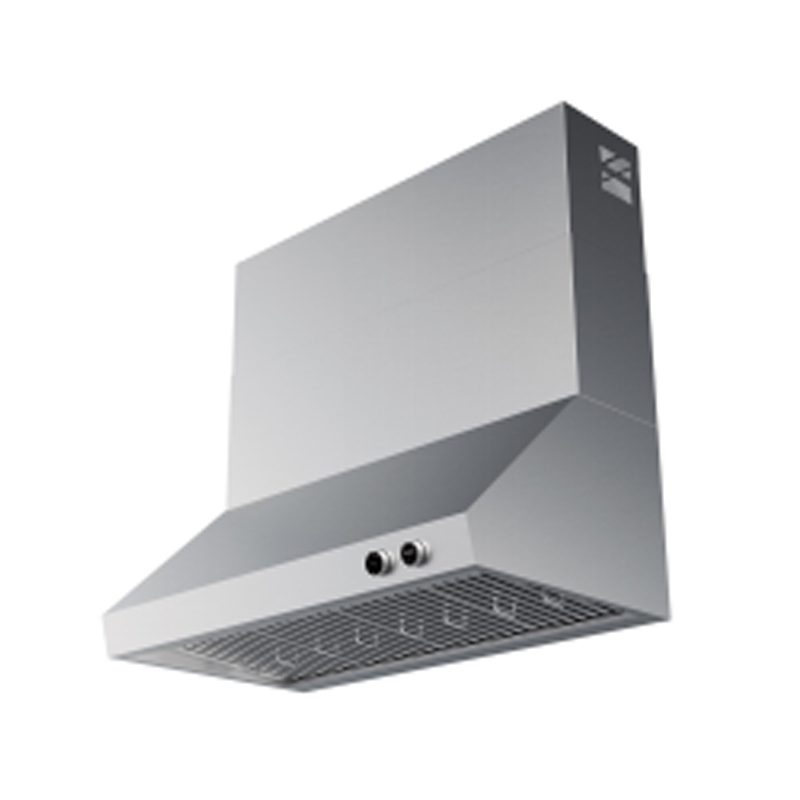 Reidom 30-Inch Under Cabinet Range Hood with Washable Baffle FiltersThis stainless steel under-cabinet hood uses washable baffle filters and button controls for easy maintenance. It is sized for smaller kitchens and helps capture smoke and grease from any cooktop, addressing common post-installation ventilation needs.View Product →
Induction Range or Separate Cooktop and Oven?
Choose an all-in-one induction range when:
- Floor space is limited and one appliance must handle both cooking and baking.
- Installation cost matters; a single unit needs one power connection and one position.
- You cook moderate volumes and want the cooktop and oven in the same work triangle.
Choose a separate induction cooktop with a separate oven when:
- The oven is used as much as the cooktop, and an eye-level oven reduces bending.
- You plan a mixed-fuel setup, such as an induction cooktop with a gas or commercial electric oven.
- Your kitchen uses modular stainless steel equipment and may be reconfigured later.
For commercial kitchens, the split approach usually wins because cooking and baking become separate stations with different staff and schedules. If you later decide to consolidate both functions into one unit, manufacturers such as Reidom build professional ranges in the same 30-, 36-, and 48-inch widths; you can review the lineup in the professional ranges section.
Frequently Asked Questions About Induction Cooktops and Ovens
Q1: Can I install an induction cooktop above a separate oven?
Yes, as long as both appliances have their own circuits and the installation clearance recommended by both manufacturers is respected. Many kitchens put a drawer between the cooktop and the oven to improve ventilation and service access.
Q2: What cookware works with an induction cooktop?
Cookware with a magnetic base: cast iron, enameled iron, and most magnetic stainless steel. If a magnet sticks firmly to the bottom of the pan, induction will heat it. Aluminum and copper pots require a magnetic induction interface disk.
Q3: Is an induction cooktop with an oven more efficient than gas?
Yes for the cooktop. Induction transfers roughly 84 to 90 percent of the electrical input into the pan, while a gas burner loses much of its heat to the surrounding air and operates at roughly 32 to 40 percent. The oven is a separate efficiency question, so compare its insulation and heating mode on its own.
Q4: Do I still need a range hood with an induction cooktop?
Yes. Induction reduces ambient heat but does not remove smoke, steam, or cooking odors. A 600 to 900 CFM hood for home use, sized wider than the cooktop, keeps the kitchen clean and comfortable.
Start with the layout, then narrow down by width, power, oven capacity, and ventilation. If induction's cookware rules do not suit the way your kitchen works, an electric range with a conventional cooktop keeps the same footprint and still provides the oven you need. Measure the space, verify the electrical supply, and plan the hood before the countertop is cut.
