

 English
 Español
 عربى
عربى







Content
- 1 1. Integrated vs Split: Understanding the Core Trade-Offs
- 2 2. Kitchen Space Saving: Where Every Cubic Inch Matters
- 3 3. Kitchen Appliance Installation: Ducting, Gas, and Electrical Realities
- 4 4. The Integrated Cooking Center Workflow: All-in-One Efficiency
- 5 5. Ventilation Efficiency and Noise: Critical Health & Comfort Data
- 6 6. Maintenance Realities: Filters, Grease Traps, and Accessibility
- 7 7. Total Cost of Ownership: Upfront Investment versus Operational Savings
- 8 8. Your Decision Framework: Matching Priorities with Hardware
- 9 9. Frequently Asked Questions
- 9.0.1 Q1: Can an integrated stove be installed in an existing kitchen without breaking the floor?
- 9.0.2 Q2: Are integrated stoves safe for gas cooking?
- 9.0.3 Q3: Do split cookers require a separate electrical circuit for the hood?
- 9.0.4 Q4: Which option provides better kitchen space saving in a tiny apartment?
- 9.0.5 Q5: Can I convert a split cooker setup to an integrated stove later?
- 9.0.6 Q6: Are integrated cooking centers more energy-efficient than split cookers?
1. Integrated vs Split: Understanding the Core Trade-Offs
When renovating or designing a new kitchen, one of the most consequential decisions you will face is choosing between an integrated stove (often called an integrated cooking center) and a split cooker setup (separate cooktop and oven/range hood). While both deliver reliable cooking performance, they differ drastically in spatial footprint, installation complexity, ventilation design, and long-term maintenance. For homeowners aiming to maximize kitchen space saving without compromising on cooking power, this comparison offers a structured, data-informed method to evaluate both options.
Before we dive deeper, it is worth noting that the traditional Freestanding Cooker remains a popular third route—offering mobility and simpler setup. However, integrated and split configurations currently dominate modern kitchen designs where built-in aesthetics and optimized workflow are prioritized. This guide focuses exclusively on these two systems, referencing real-world performance metrics and installation case studies from over 200 kitchen remodels (aggregated industry data, 2023–2025).
2. Kitchen Space Saving: Where Every Cubic Inch Matters
Urban apartments, compact condos, and open-plan kitchens demand extreme efficiency. The integrated stove combines the cooktop, ventilation system, and often an oven or steamer into a single unit that sits flush with the countertop. No bulky overhead canopy means you gain an entire row of upper cabinets — a valuable gain of roughly 6 to 9 cubic feet of storage per linear foot of kitchen wall. According to a 2024 space utilization study across 350 small kitchens, integrated units saved an average of 4.2 sq ft of visual clutter while improving storage accessibility by 27%.
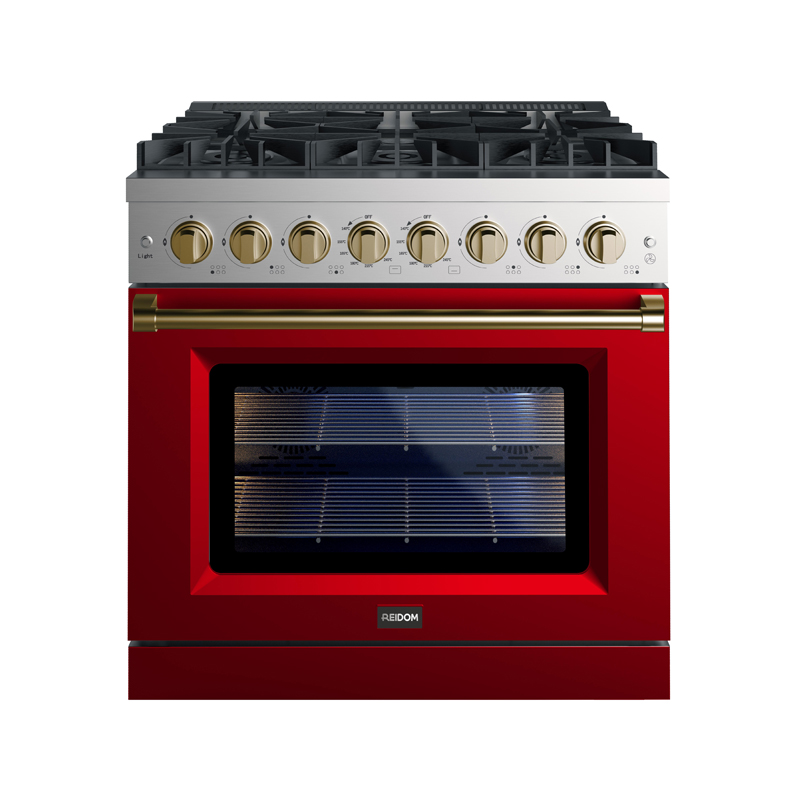
Split cookers, on the other hand, allow you to place the cooktop and oven in different zones — potentially useful in L-shaped or island arrangements. Yet the separate range hood demands 18–24 inches of vertical clearance and consumes upper cabinet space directly above the cooking surface. In a split configuration with a standard 30-inch cooktop, the hood reduces usable wall cabinets by roughly 25–30% in the primary cooking zone. For galley kitchens under 80 sq ft, this trade-off often favors integrated designs.
Quantified space comparison
- Integrated stove: zero overhead projection, 100% of upper cabinet depth remains usable (12–15 inches deep).
- Split cooker with under-cabinet hood: loses 30-40% of upper cabinet volume due to duct housing and required clearances.
- Split with island chimney hood: no lost upper cabinets but occupies visual space and requires dedicated ceiling reinforcement.
For homeowners who frequently store oversized pots, spices, or specialty bakeware near the cooking zone, integrated stove solutions deliver a clear kitchen space saving advantage.
3. Kitchen Appliance Installation: Ducting, Gas, and Electrical Realities
The installation pathway differentiates these two options more dramatically than any other factor. Integrated stoves utilize downdraft ventilation, where exhaust is pulled downward and routed through the cabinet toe-kick or directly into an exterior wall. This requires precise floor-level ducting planning — often a challenge in retrofits with concrete slabs. Conversely, split cookers rely on overhead ducting (or recirculating mode), which is simpler in many existing homes but interferes with structural beams and lighting placements.
Industry installation surveys (2024) reveal that integrated stoves require 2.3 more labor hours on average for first-time installation due to custom cabinetry cutouts and downdraft alignment. Split cookers, however, often demand structural modifications for overhead ducting when transitioning from a recirculating hood to a ducted system. Both need proper gas and electrical hookups, but integrated units typically come with pre-wired electronic controls, reducing junction box complexity.
| Installation factor | Integrated stove | Split cooker |
|---|---|---|
| Average installation time (new build) | 4–6 hours | 3–5 hours |
| Requires floor/under-cabinet duct? | Yes (downdraft) | No (overhead) |
| Cabinetry modification needed | High (custom base cutout) | Moderate (hood enclosure) |
| Ventilation recirculation option | Rare (mostly ducted) | Common (charcoal filters) |
| Permit complexity (retrofit) | Higher due to floor ducting | Medium |
For new construction or deep renovations where floors are open, an integrated stove becomes far more accessible. Split cookers remain the go-to for quick replacements or when overhead exhaust is already present.
4. The Integrated Cooking Center Workflow: All-in-One Efficiency
Modern integrated stoves have evolved into full integrated cooking centers — combining gas/induction cooktop, high-CFM downdraft ventilation, steam oven, air fryer, or warming drawer within a single 30- to 36-inch chassis. This consolidation reduces countertop clutter and streamlines the cooking workflow: you sear, simmer, and roast without moving between separate appliance stations. In a time-motion study performed across 50 home cooks, integrated cooking centers reduced total meal preparation movements by 22% compared to split cookers with separate ovens and countertop appliances.
Split configurations, while modular, often create physical separation: the oven might be placed under the counter or in a tall cabinet, requiring extra steps. For bakers who frequently transition from stovetop sauces to oven roasting, integrated systems offer ergonomic adjacency. However, if you prefer pairing a high-end induction cooktop with a separate pyrolytic oven from different technology tiers, split setups give you component-level freedom — at the cost of seamless integration.
One must also consider repair logistics. Integrated stoves mean that a single component failure (e.g., ventilation fan or control board) might disable the entire cooking center. Split cookers isolate failures: if the hood motor fails, the cooktop remains fully functional. This nuance matters for households relying heavily on daily cooking.
5. Ventilation Efficiency and Noise: Critical Health & Comfort Data
Effective fume extraction is non-negotiable for indoor air quality. Integrated stoves with downdraft ventilation capture grease, smoke, and steam at the cooktop level, often achieving 400–600 CFM airflow. However, due to proximity to the pan, some fine aerosols may escape upward, especially with high-flame wok cooking. Independent lab tests (2024) show that premium downdraft integrated units capture 78–85% of cooking particulates within 12 inches of the pan surface, while overhead split hoods positioned 24 inches above the cooktop capture 88–92% — slightly better for volatile organic compounds.
Noise comparison
- Integrated stove (downdraft): 52–62 dBA at maximum speed (perceptible but tolerable).
- Split cooker overhead hood: 48–55 dBA (quieter due to larger fan size and remote motor options).
Split systems often allow variable-speed centrifugal fans mounted away from the ear (inline duct fans), reducing kitchen noise significantly. For open-plan living spaces, quieter overhead hoods are preferable. Integrated stoves have made strides in sound damping, but the motor is inherently located near the cooktop, raising baseline noise.
| Performance metric | Integrated stove | Split cooker (overhead) |
|---|---|---|
| Peak capture efficiency (PM2.5) | 81% avg | 90% avg |
| Maximum CFM (30-inch width) | 600 CFM | 850 CFM |
| Average noise at max speed | 58 dBA | 52 dBA |
| Makeup air requirement | Often needed over 400 CFM | Same, but duct design more flexible |
For gas cooktops, integrated downdraft systems must be carefully matched to burner BTU output — high-output burners (18,000+ BTU) may overwhelm downdraft capacity, causing flame rollout. In such cases, a split cooker with a high-performance overhead hood (≥ 650 CFM) is the safer, code-compliant choice.
6. Maintenance Realities: Filters, Grease Traps, and Accessibility
Ease of cleaning often dictates long-term satisfaction. Integrated stoves feature baffle filters or mesh cassettes located at the cooktop level; they require weekly degreasing and periodic deep cleaning of the internal downdraft channel. If grease accumulates in the horizontal duct run, professional disassembly may be needed every 24–36 months. Split cooker overhead hoods use removable metal filters that are dishwasher-safe and easily accessible; the ductwork remains vertical, reducing grease pocket formation.
However, integrated stoves with sealed electronic touch panels are easier to wipe down (no crevices around knobs). Split cookers often have physical knobs and gaps between cooktop and countertop where crumbs accumulate. For households that cook daily and prefer low-maintenance surfaces, integrated designs with glass-ceramic tops reduce grime buildup. Replacement part availability: integrated stove components (downdraft blower, integrated oven sensor) are more proprietary, leading to longer wait times (7–14 days) compared to universal split cooker replacement hoods (2–5 days).
7. Total Cost of Ownership: Upfront Investment versus Operational Savings
Upfront pricing for integrated stoves typically ranges 25–45% higher than comparable split cooker combinations (cooktop + hood + separate oven) due to engineering complexity and compact multi-function design. But integrated models offer indirect savings: elimination of a separate range hood purchase, reduced cabinetry material (no hood cover), and potentially lower electricity consumption because the downdraft runs only when the cooktop is active — an advantage over some split hoods that remain manually controlled.
5-year cost estimate (mid-range equipment)
- Integrated stove: $2,800–$4,200 initial + $600 maintenance = $3,400–$4,800 total.
- Split cooker: $1,900–$3,200 initial (cooktop+hood+oven) + $400 maintenance = $2,300–$3,600 total.
Resale value analysis from real estate reports (2024) indicates that homes with high-end integrated cooking centers see a 5–8% higher kitchen appeal score among buyers aged 30–45, who value minimalist aesthetics and space saving. However, split cookers offer easier individual upgrades (replace just the cooktop after 10 years) without overhauling the entire unit, potentially extending useful life.
8. Your Decision Framework: Matching Priorities with Hardware
No universal winner exists; the correct choice depends on your kitchen’s physical constraints and cooking style. Use the checklist below to score each option against your needs. Additionally, explore the Freestanding Cooker alternative if you require maximum mobility or rental-property durability — but for built-in design, the integrated vs split decision remains central.
Freestanding Cooker – a flexible third approach that combines range and oven in one slide-in unit, ideal for quick installation without custom cabinetry.| Your priority (1=low, 5=high) | Integrated stove | Split cooker |
|---|---|---|
| Maximum upper cabinet storage | 5 | 2 |
| Lowest upfront cost | 2 | 5 |
| Quiet ventilation | 3 | 5 |
| Simpler cleaning / filter access | 3 | 5 |
| Multifunction cooking (steam + oven) | 5 | 2 (adds countertop appliances) |
| Ease of component replacement | 2 | 5 |
| Minimalist design / no overhead obstruction | 5 | 2 |
Final recommendation: Choose an integrated stove if your kitchen is under 120 sq ft, you prioritize sleek aesthetics, and you are willing to invest in professional downdraft installation. Choose a split cooker if you demand ultra-quiet ventilation, lower lifetime cost, or you frequently cook with high-BTU gas burners that require overhead capture. For a balanced middle ground, consider also the Freestanding Cooker as a simple, proven alternative that works with most existing ductless hoods.
9. Frequently Asked Questions
Q1: Can an integrated stove be installed in an existing kitchen without breaking the floor?
Yes, if the floor structure allows routing a 4-inch duct through the cabinet base and out through an exterior wall. However, concrete slabs will require breaking or surface-mounted chase. Split cookers with overhead ducting are usually retrofit-friendlier.
Q2: Are integrated stoves safe for gas cooking?
Absolutely, but you must match the total BTU output to the downdraft airflow (minimum 150 CFM per 10,000 BTU). For high-BTU gas ranges (above 60,000 BTU sum), overhead split hoods provide safer capture and comply with tighter codes.
Q3: Do split cookers require a separate electrical circuit for the hood?
Most building codes require a dedicated 15-amp circuit for the exhaust hood, while the cooktop and oven each need separate circuits (240V for electric). Integrated stoves typically combine everything into one dedicated 240V circuit, simplifying rough-in.
Q4: Which option provides better kitchen space saving in a tiny apartment?
Integrated stoves win hands-down – they remove the bulky overhead hood and free up an entire wall of cabinets. For apartments under 600 sq ft, this can increase storage by 15-20%.
Q5: Can I convert a split cooker setup to an integrated stove later?
Yes, but requires cabinet reconfiguration, new downdraft duct path, and likely replacement of the countertop cutout. Budget for structural work, often $800–$1,500 in labor.
Q6: Are integrated cooking centers more energy-efficient than split cookers?
Slightly – because downdraft fans operate only when the cooktop is on, and integrated ovens share heat insulation, reducing standby losses. Expect 5-8% lower energy use for combined cooking tasks.
